
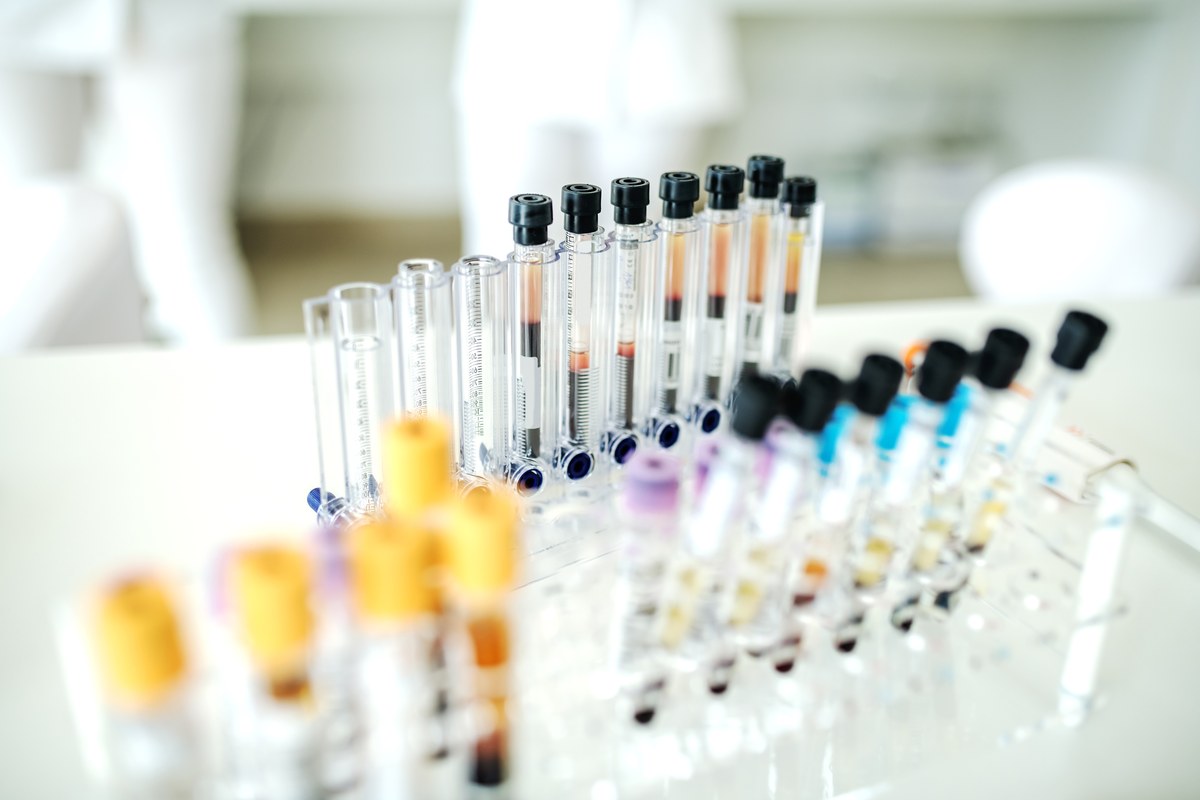
Challenging a Michigan breath or blood test: start with how the test was run
I am Mitchell Bisson, a Grand Rapids OWI lawyer. I have litigated for over 15 years. This page explains how Michigan breath, blood and urine tests are supposed to be run, what the law presumes about the result, and where a test can be questioned. A number on a printout is evidence, not the end of the case. I prepare every case as if it will be tried. I do not promise outcomes.
The short answer. The result of a blood, urine or breath analysis is admissible and is presumed to match your alcohol level when you drove. MCL 257.625a(6)(a). That presumption is only as good as the testing. Breath tests must follow State Police rules on equipment, operators, a 15-minute observation period and confirming samples. Mich Admin Code, R 325.2651 to R 325.2659. A rule violation does not automatically keep the result out, but it can raise a real question about accuracy. Nothing here predicts how your case will end.
The tests Michigan police use, and what each one is good for
The table separates the roadside screening test from the chemical tests after arrest. They follow different rules and serve different purposes in court.
| Test | When it is used | What the law says about it | Authority |
|---|---|---|---|
| Preliminary breath test (PBT) | Roadside, before arrest, when the officer has reasonable cause to believe you operated a vehicle and may have been affected by alcohol or drugs | You may be required to take it. Refusing is a civil infraction for most drivers. The result can support an arrest, and has limited uses in court. | MCL 257.625a(2) |
| Evidential breath test | After arrest, on an approved instrument by a certified operator | Admissible and presumed to match your level at the time you drove. Run under State Police rules. | MCL 257.625a(6)(a), (g) |
| Blood test | After arrest by consent, or by court order or warrant if you refuse | Only a licensed physician, or a person acting under a physician’s delegation who is qualified to withdraw blood and acting in a medical environment, may draw it at an officer’s request. | MCL 257.625a(6)(b)(iv), (c) |
| Urine test | After arrest, as one of the chemical tests | Must be taken and collected in a reasonable manner. | MCL 257.625a(6)(c) |
| Your own independent test | After you take the officer’s test | You may demand that a person of your choosing administer one of the chemical tests, and you must get a reasonable opportunity to have it done. You are responsible for obtaining the analysis. | MCL 257.625a(6)(b), (d) |
| Hospital blood drawn after a crash | A driver in a crash is taken to a medical facility and blood is drawn for treatment | The lab result is admissible to show alcohol or drug content, whether or not you were offered or refused a chemical test. | MCL 257.625a(6)(e) |
Michigan’s implied consent law treats a driver on a public road as having consented to chemical tests of blood, breath or urine when arrested for the listed offenses. A person with hemophilia, diabetes or a condition requiring an anticoagulant is not considered to have consented to a blood draw. MCL 257.625c(1), (2). The license side of a refusal has its own deadlines, and I treat it as a separate track from the court case.
The roadside breath test
The preliminary test is a screening tool. An officer may arrest a person based in whole or in part on its result. MCL 257.625a(2)(a). In court the result can be used to help decide whether the arrest was valid, and in two narrow situations to rebut testimony about a rising or falling breath alcohol level. MCL 257.625a(2)(b). It is not the evidential test. The State Police rules require the PBT operator to determine that you have not smoked, regurgitated or placed anything in your mouth for at least 15 minutes, and require monthly accuracy checks of the instrument within plus or minus 5 percent. R 325.2657a(1)(b); R 325.2656a.
What the State Police rules require for an evidential breath test
The rules are published as Mich Admin Code, R 325.2651 to R 325.2659, in the version amended in May 2023. The statute directs the State Police to write them. MCL 257.625a(6)(g). I read them against the paperwork in every breath case. These are the parts that matter most.
Approved equipment. Evidential and preliminary instruments must meet the National Highway Traffic Safety Administration model specifications, and operators may use only equipment approved by the State Police. R 325.2652.
Accuracy checks. An instrument that does not examine a known standard with each subject test must be verified for accuracy at least once each calendar week, and the result must not exceed plus or minus 5 percent when checked against a controlled device at 0.080. It must also be inspected, verified and certified within 120 days of the previous inspection. An instrument that does examine a known standard with each test must be inspected and certified at least twice a year. R 325.2653. This is why I ask for the instrument’s logs and certification records, not just the printout.
Certified operators and records. An evidential instrument must be operated by an appropriate class operator certified under the rules, using approved procedures and forms. Records of operation, analyses and results must be kept at the instrument location, and copies forwarded to the State Police. R 325.2655(a)-(c). The rules define a class III operator as one certified to conduct a subject test on an evidential breath instrument. R 325.2651(1)(h).
The 15-minute observation. You may be given an evidential breath test only after being observed for not less than 15 minutes before the sample is collected by at least one certified operator, and during that time you must not have smoked, regurgitated or placed anything in your mouth. The operator need not stare continuously but must be close enough to be aware of your actions, and may do paperwork if you remain in the operator’s field of vision. Breaks lasting only a few seconds do not invalidate the observation if the operator can reasonably determine nothing went into your mouth. R 325.2655(e). In practice the questions are when the clock started, who was watching, and whether you burped, vomited or had something in your mouth.
The second sample. The operator must request a second sample after the first is analyzed, unless an item or substance is found in your mouth that could interfere. The rule says the first result is sufficient for the evidentiary requirements of the implied consent law, and the second sample exists to confirm the first. R 325.2655(f). The two results may differ only within a set range, which grows with the reading: plus or minus 0.01 when the first sample is from 0.00 to 0.14, 0.02 from 0.15 to 0.24, 0.03 from 0.25 to 0.34 and 0.04 at 0.35 or more. R 325.2655(g). If the variation is too large, a third sample is requested, and if the third does not fit within the allowed variation of either of the first two, the person is asked to give blood or urine. R 325.2655(h). The result is reported in grams of alcohol per 210 liters of breath, truncated to the second decimal place or expressed to three decimals if the instrument is programmed to do so. R 325.2655(i).
What happens when the officer breaks a rule
A violation does not automatically throw out the result. In People v. Wujkowski, 230 Mich. App. 181 (1998), the Court of Appeals said the rules exist to ensure accuracy and rejected automatic suppression. An officer’s six-second glance away during the observation period was harmless where nothing suggested the test was inaccurate. The court contrasted an earlier case where the operator watched for no more than eight minutes and the defendant’s hand was at his face or mouth throughout.
In People v. Fosnaugh, 248 Mich. App. 444 (2002), the first reading was 0.18 and the second test aborted as an invalid sample because the machine detected mouth alcohol. The Court of Appeals held that no third test was required and that suppressing the first result was error. The lack of a confirming result went to weight, not admissibility. The court found no evidence that the machine would have missed mouth alcohol on the first sample and caught it on the second.
Check the rule version. Both opinions quote the 1994 version of the rule, which has since been amended. The rule in force on the date of your test controls, so I pull the version for your arrest date and compare it with what the operator did.
The presumption, your other evidence and the prosecutor’s paperwork
The statute presumes the analysis matches your level at the time you operated the vehicle. MCL 257.625a(6)(a). But the chemical test provisions do not limit other admissible evidence on whether you were impaired or had a prohibited alcohol content. MCL 257.625a(7). So I look at driving, speech, balance, the video and the timeline, and not only at the number.
The numbers are measured per 100 milliliters of blood, per 210 liters of breath or per 67 milliliters of urine. The statute names an alcohol content of 0.08 grams or more as one of the questions the other evidence can address, and for a driver under 21 it names any bodily alcohol content, meaning 0.02 grams or more but less than 0.08, or any presence of alcohol from drinking. MCL 257.625a(7)(b), (c). That is why the unit, the sample type and the exact time of the sample matter when a result sits close to a line.
The two-day rule. If a chemical test was given, the results must be made available to you or your attorney on written request to the prosecution, with a copy filed with the court. The prosecution must furnish them at least 2 days before trial, and failure to fully comply bars the prosecution from admitting the results. MCL 257.625a(8). I send that written request early in every test case.
Refusal at trial. If you refused a chemical test, the refusal is admissible only to show that a test was offered. It is not evidence of innocence or guilt, and the jury must be told so. MCL 257.625a(9).
Your right to an independent test
Before a chemical test you must be told that you may demand that a person of your choosing administer one of the tests. A person who takes the officer’s test must be given a reasonable opportunity to have a person of their own choosing administer one within a reasonable time after detention, and the person charged is responsible for obtaining the analysis of that sample. MCL 257.625a(6)(b), (d). If the right was denied, the remedy is not automatic dismissal. Under People v. Anstey, 476 Mich. 436 (2006), the court decides after a hearing whether the right was violated and, if so, may on request tell the jury so and let the jury decide what weight to give that fact.
Blood draws, warrants and hospital blood
If you refuse the officer’s request for a test, a test must not be given without a court order, but the officer may seek one. MCL 257.625a(6)(b)(iv). Without a warrant, consent or a recognized exception, a blood draw raises Fourth Amendment questions. Missouri v. McNeely, 569 U.S. 141 (2013) held that the natural dissipation of alcohol is not an exigency in every case. Birchfield v. North Dakota, 579 U.S. 438 (2016) held that a breath test, but not a blood test, may be administered as a search incident to a lawful arrest. I read the warrant, the affidavit behind it and the draw itself.
Blood drawn at a hospital after a crash for medical treatment is treated differently. The lab analysis is admissible even if you were never offered or had refused a chemical test, and the medical facility must give the result to a prosecutor who asks. MCL 257.625a(6)(e). The Michigan Supreme Court rejected constitutional challenges to the predecessor of that procedure in People v. Perlos, 436 Mich. 305 (1990), but the statute does not make the result accurate. Chain of custody, the type of blood test, the time of the draw and the reliability of the lab remain open questions.
How I handle a breath or blood test case
- Get the test paperwork. I request the printout, the operator’s certification, the instrument’s weekly and 120-day or twice-yearly records, and the log for the day of your test.
- Build the timeline. I work out when you were stopped, when you were arrested, when the observation started and when each sample was taken, using the video and the reports.
- Check the rule version. I pull the version of the State Police rules in force on your test date and compare each step.
- Test the blood evidence. I look at the warrant or consent, who drew the blood, how it was kept and what the lab did.
- Send the written request. I make the written request for the results so that the two-day rule applies.
- Decide what the test is worth. If the result holds up, I turn to the other questions in the case, including the stop and the arrest. If it does not, I press the prosecutor or the judge on it.
- Prepare for trial. I prepare the case as if it will be tried.
Ways a test challenge may play out
How a test challenge ends depends on the facts, the judge and the prosecutor. These are the routes I look at.
Weight, not admissibility. As the cases above show, a rule problem often goes to how much the jury should trust the result. That still matters, because a jury that doubts the machine may doubt the number.
A motion about the evidence. A warrant defect, a denied independent test or a missed disclosure date can support a motion, and the remedy depends on the violation, as the statute and cases describe.
A different resolution. The test is one piece of the prosecutor’s case. A plea to a different offense needs the prosecutor’s consent. MCR 6.301(D).
What I need from you
Bring every paper you were given at the station, including the test printout if you received one, the implied consent advice form, the citation and any license notice. Write down what you ate and drank, when you stopped, and what happened between your arrest and the test, including whether you coughed, burped, vomited or had anything in your mouth. Tell me whether you asked for your own test and what you were told. Do not discuss the test with anyone but me.
Where your Kent County OWI case will be heard
I represent clients charged in Grand Rapids, Kentwood, Grandville, Wyoming and across Kent County. A felony begins in district court with an arraignment and, if the case continues, a preliminary examination. MCL 600.8311(c), (e). Michigan law sets the Kent County district courts by municipality. The 61st District Court serves the city of Grand Rapids, the 59th serves the cities of Grandville and Walker, the 62A serves the city of Wyoming and the 62B serves the city of Kentwood. MCL 600.8128a; MCL 600.8130(1)-(3). The 63rd District Court serves the rest of Kent County, which includes the cities of Rockford, Lowell, Cedar Springs and East Grand Rapids and the surrounding townships. MCL 600.8130(4). If the magistrate binds the case over, the felony is arraigned in the circuit court, which for Kent County is the 17th Judicial Circuit. MCL 766.13; MCL 600.8311(f); MCL 600.518. Misdemeanor OWI cases stay in the district court, which has jurisdiction over misdemeanors punishable by a fine or imprisonment not exceeding 1 year. MCL 600.8311(a).
Why people hire me for a Michigan breath or blood test case
You work directly with me, the lawyer handling your case, from the first court date forward. I tell you what the test shows, what the paperwork shows and what each choice could mean for your license and your record. I do not promise outcomes. I build the case the facts support and prepare for trial.
Questions I hear from people about breath and blood tests in Michigan
Can the prosecutor tell the jury I refused a breath or blood test in Michigan?
The jury can hear that a test was offered, but under MCL 257.625a(9) a refusal is admissible only to show a test was offered. It is not admissible as evidence of innocence or guilt, and the jury must be instructed that way. The refusal still has separate license consequences handled by the Secretary of State.
Do I have the right to my own independent chemical test after a Michigan OWI arrest?
Yes. Before a chemical test, the arrested person must be told they may demand that a person of their own choosing administer one of the chemical tests. Under MCL 257.625a(6)(d), a person who takes the officer’s test must be given a reasonable opportunity to have their own test done within a reasonable time after detention. The person is responsible for obtaining the analysis.
How does the prosecutor connect my test result to the time I was driving in Michigan?
MCL 257.625a(6)(a) makes the result of a blood, breath, or urine analysis admissible and presumes it matches the alcohol level at the time you drove. On a written request, the prosecution must provide the results at least 2 days before trial, and failure to comply bars admission of the results by the prosecution.
Can police use blood drawn at the hospital after my crash in an OWI case?
Yes, in some cases. If a driver is taken to a medical facility after a crash and blood is drawn for medical treatment, MCL 257.625a(6)(e) makes the lab analysis admissible in a civil or criminal case to show alcohol or drug content, whether or not the person was offered or refused a chemical test. The medical facility must give the result to a prosecutor who requests it.
What rules apply to a breath test at the station, and does an officer’s rule violation keep the result out of evidence?
Breath must be collected in a reasonable manner, under uniform State Police rules (MCL 257.625a(6)(c), (6)(g)), and the rule requires at least 15 minutes of observation before an evidential breath sample (Mich Admin Code, R 325.2655(e)). A violation does not automatically suppress the result; the Court of Appeals asks whether it calls the test’s accuracy into question (People v Wujkowski, 230 Mich App 181 (1998)).
My breath machine gave an “invalid sample” on the second test. Can the first reading still be used in Michigan?
Usually yes. In People v Fosnaugh, the first reading was 0.18 and the second test aborted as an invalid sample because the machine detected mouth alcohol. The Court of Appeals held that no third test was required and that suppressing the first result was error. Under the current rule, the first sample is enough for evidentiary purposes and the second only confirms it, so a missing confirmation goes to weight. The trap is mouth alcohol or an observation lapse before the first sample.
Related Michigan pages
- Grand Rapids OWI lawyer
- License and implied consent
- Field sobriety tests and checkpoints
- High BAC OWI
- Search and seizure and motions to suppress
I represent people charged with OWI in Kent County and West Michigan. Contact me 24/7 by phone or email. Your Rights, My Fight! Call for a free initial consultation.
Big-Firm Power. Street-Level Grit.
Law Offices of Mitchell S. Bisson, 2828 Kraft Ave SE, Suite 295, Grand Rapids, MI 49512, serving Kent County and West Michigan.
This page provides general information about Michigan law and is not legal advice. Reading it does not create an attorney-client relationship. Laws change and every case turns on its own facts. Consult a licensed attorney about your specific situation.