
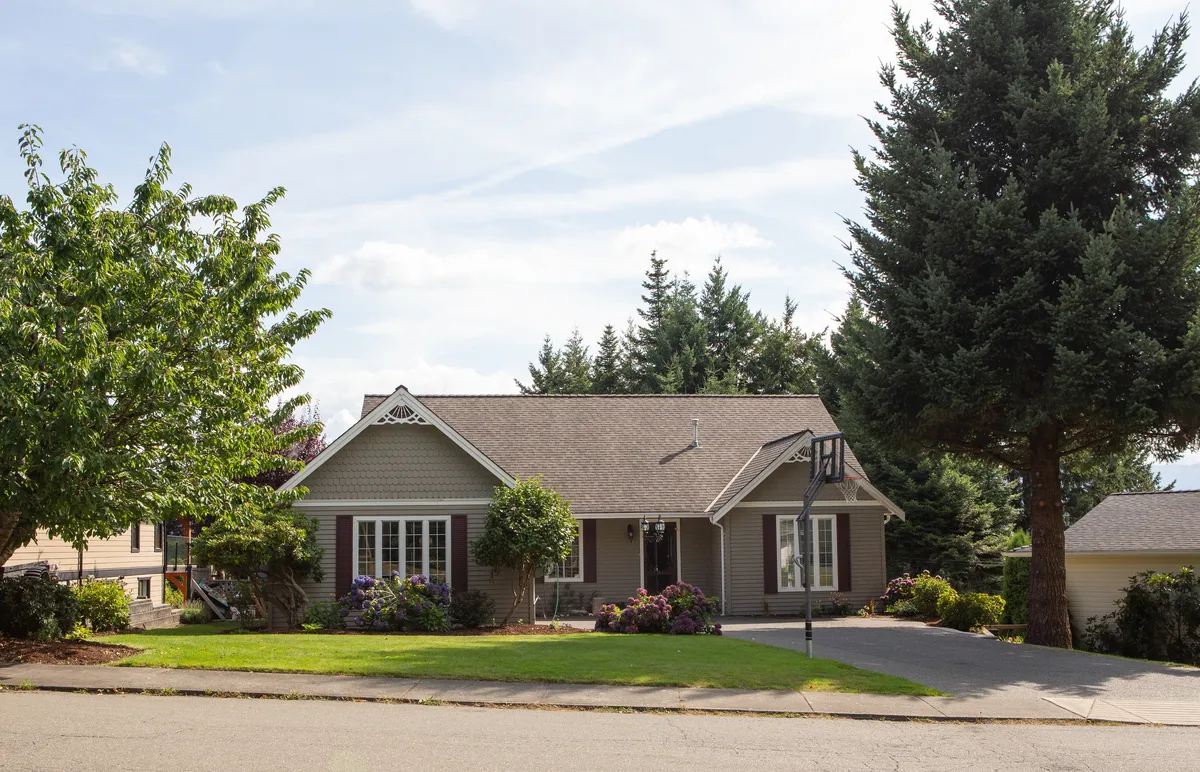
Foreclosure defense for Michigan homeowners
I am Mitchell Bisson, a Grand Rapids real estate lawyer. I have litigated for over 15 years. A foreclosure notice raises hard questions fast: how much time is left, whether the sale can be stopped, and what happens to the home afterward. This page covers the questions Michigan homeowners ask most, including how foreclosure by advertisement works, the redemption period after a sheriff’s sale, loan modification requests, and lender mistakes. I represent homeowners in foreclosure matters, not lenders. The short answers below come from my Michigan legal library.
In Michigan, a mortgage that contains a power of sale can be foreclosed by advertisement, a process that runs on published notice and a public sale instead of a lawsuit. MCL 600.3201. The notice is published once a week for four successive weeks in a newspaper published in the county, a copy is posted on the property within 15 days after the first publication, and the property is sold at a public sale between 9 a.m. and 4 p.m. at the place where the circuit court sits, to the highest bidder. MCL 600.3208; MCL 600.3216. The other route is a circuit court lawsuit under MCL 600.3101. For homeowners in Grand Rapids, Kentwood, Wyoming and the rest of Kent County, the sale is not the end of the story. After a sale by advertisement the sheriff’s deed does not become operative until the redemption period runs out, and that period is the first number to learn. MCL 600.3236.
The period is not the same for every home. For a mortgage on residential property of up to four units, it is six months only if the amount claimed due at the date of the notice of foreclosure was more than 66-2/3% of the original debt. If that test is not met and no other subsection applies, it is one year, and a home abandoned as the statute defines can be down to one month or 30 days. MCL 600.3240(8)-(12). The notice must state the length of the period, and the certificate of sale must state the date by which the property must be redeemed. MCL 600.3212(1)(f); MCL 600.3240(2). Running the percentage from your own notice is the first thing I do.
If a letter or a website tells you to ask your lender for a loan modification meeting under MCL 600.3205a, that statute was repealed effective June 30, 2013 by 2012 PA 521. MCL 600.3205a. Loss mitigation rights today come mainly from a federal servicing rule, 12 CFR 1024.41, and they turn on when a complete application reaches the servicer.
This page is written for homeowners. Nothing here predicts how a particular case will end, and I do not promise outcomes. I do promise to read the paper, tell you the dates, and tell you where you stand.
Michigan foreclosure rules, deadlines and where homeowners stand
These are the rules in the statutes, the federal regulation and the case law. The dates in your case depend on the sale, the notice and the loan.
| Claim or issue | What must be shown | Time limit or key rule | Authority |
|---|---|---|---|
| Foreclosure by advertisement | A default that made the power of sale operative; no pending action to recover the debt (unless discontinued or an execution came back unsatisfied); a recorded mortgage; a foreclosing party that owns the debt or an interest in it, or is the servicing agent; and, if it is not the original mortgagee, a recorded chain of title | Notice published for 4 successive weeks and posted within 15 days after first publication; public sale between 9 a.m. and 4 p.m. at the place of holding circuit court | MCL 600.3204(1), (3); MCL 600.3208; MCL 600.3216 |
| Judicial foreclosure | A lawsuit in circuit court to foreclose the mortgage | 6 months after the sale to redeem by paying the amount bid with interest at the mortgage rate | MCL 600.3101; MCL 600.3140(1) |
| Redemption after a sale by advertisement | Payment of the amount required, to the purchaser or the register of deeds, within the applicable period | Residential up to 4 units: 6 months if more than 66-2/3% of the original debt was claimed due at the date of the notice, 1 month or 30 days if abandoned as the statute defines, otherwise 1 year | MCL 600.3240(1)-(2), (8)-(12) |
| Loss mitigation application | A complete application received by the servicer | No first foreclosure notice or filing unless the loan is more than 120 days delinquent (with listed exceptions); a complete application received more than 37 days before the sale blocks the sale until the servicer’s process runs out | 12 CFR 1024.41(f)(1), (g) |
| Setting aside a sale for a defect | A defect in the foreclosure, and prejudice: the homeowner would have been in a better position to preserve the interest in the property without the lender’s noncompliance | A defect makes the sale voidable, not void from the start; after the redemption period expires the mortgagor’s rights in the property are extinguished | Kim v. JPMorgan Chase Bank, N.A., 493 Mich. 98, 115-116 (2012); Bryan v. JPMorgan Chase Bank, 304 Mich. App. 708, 713-714 (2014) |
| Limit on the lender’s time to foreclose | Foreclosure begun within the statutory period | 15 years after the mortgage becomes due or 15 years after the last payment, including foreclosure by advertisement | MCL 600.5803 |
What the lender has to get right
The right party. The foreclosing party must be the owner of the debt or of an interest in it, or the servicing agent of the mortgage. If it is not the original mortgagee, a record chain of title evidencing the assignment of the mortgage to it has to exist before the sale. MCL 600.3204(1)(d), (3). The assignments are public records at the register of deeds, so I pull them early. In Kim, a bank bought the mortgage from the FDIC under a voluntary purchase agreement. The Michigan Supreme Court held that the bank did not acquire the mortgage by operation of law and had to record its interest before foreclosing by advertisement. 493 Mich. 98, 117-118 (2012).
No competing lawsuit on the debt. A foreclosure by advertisement requires that no action at law has been started to recover the debt, or that any such action was discontinued or an execution on the judgment came back unsatisfied in whole or in part. A receivership and an action to enforce an assignment of rents do not count as actions to recover the debt. MCL 600.3204(1)(b). The order of events matters, so I put the dates of any collection suit next to the dates of the foreclosure notice.
A proper notice. The notice must name the mortgagor, the original mortgagee and any foreclosing assignee, give the mortgage and recording dates, state the amount claimed due, describe the property, state the redemption period, include the statement about damage liability under MCL 600.3278, and give the foreclosing party’s attorney’s name, address and telephone number. A residential notice must also carry a statement for military service members, and the foreclosing party may not publish in a newspaper in which it or its agent has a majority ownership interest. An erroneous or omitted street address does not affect the validity of the notice or the sale. MCL 600.3212. I read the notice line by line against the recorded mortgage and the assignments.
Defenses and answers I look at in a foreclosure case
Every foreclosure is different. These are the questions I start with.
A defect in the process. A mistake by the lender does not automatically undo a sale. In Kim, the Michigan Supreme Court held that defects or irregularities in a foreclosure proceeding make the foreclosure voidable, not void from the start. To set the sale aside, the homeowner must show prejudice, meaning the homeowner would have been in a better position to preserve the interest in the property without the lender’s noncompliance with the statute. 493 Mich. 98, 115-116 (2012). A technical error that changed nothing for you is a weak foundation. A recording gap or a bad assignment chain, together with proof of what you could have done differently, is a different conversation.
Waiting too long. In Sweet Air Investment, Inc. v. Kenney, the occupants attacked a notice of an adjourned sale as defective. The Court of Appeals repeated that a defect in notice makes a sale voidable and found no prejudice, because the occupants made no effort to redeem and took no action until well after the redemption period had run and eviction began. 275 Mich. App. 492, 502-503 (2007). That is why I do not like to hold a sale defect in reserve for the eviction case.
Military service. For an obligation that began before a servicemember’s military service, a sale, foreclosure or seizure for breach of a mortgage obligation is not valid if made during, or within one year after, the period of military service, unless a court order was granted before the sale or the sale was made under an agreement allowed by the statute. 50 U.S.C. 3953(a), (c). If you or a spouse is on active duty or recently discharged, tell me at the first meeting.
A lender that bought at its own sale and then sues for the balance. If the holder of the loan became the purchaser at a sale by advertisement and later sues for a deficiency, the defendant may show that the property was fairly worth the amount of the debt at the time and place of sale, or that the bid was substantially less than its true value, and that defeats the deficiency judgment in whole or in part. The section does not apply to sales made under a court order or decree. MCL 600.3280. Value as of the sale date, shown by an appraisal and comparable sales, carries this defense.
Redemption, the house and the money after the sale
Redeeming. The mortgagor, the mortgagor’s heirs or personal representative, and a person with a recorded interest who lawfully claims under the mortgagor can redeem the entire premises. To do so they pay the amount bid at the sale, interest from the sale date at the mortgage rate, the sheriff’s fee the purchaser paid, and $5 if the payment goes to the register of deeds, plus certain taxes, assessments, senior-lien amounts and insurance premiums if the purchaser paid them and filed the affidavits the statute requires. A timely and complete redemption voids the purchaser’s deed. MCL 600.3240(1)-(4). The amount stated in the purchaser’s recorded affidavits is the amount necessary to satisfy the redemption requirements. MCL 600.3240(13). Get the affidavit before you pay.
Living in the home. During the redemption period the deed is not operative, and the Michigan Supreme Court has said that the foreclosure-sale purchaser has no possessory interest in the property during that period while the mortgagor retains possessory rights. People v. March, 499 Mich. 389, 421 (2016). March was a criminal case about removing fixtures from a foreclosed home, and it is not permission to damage one: the statute makes the mortgagor and anyone else liable on the mortgage responsible to the purchaser for physical injury to the property beyond normal wear during the redemption period. MCL 600.3278(1).
Inspections. After the purchaser gives the initial written notice, it may make one initial interior inspection on at least 72 hours’ notice and any number of exterior inspections. Later requests for information about the interior are limited to once in a calendar month and three times in any six months unless the purchaser has reasonable cause to believe damage is imminent or has occurred. MCL 600.3237; MCL 600.3238(2)-(4). If an inspection is unreasonably refused, or damage is imminent or has occurred, the purchaser may start summary proceedings for possession, and a judgment for possession extinguishes the right of redemption. MCL 600.3238(6)-(8), (10). Answer every inspection notice in writing and keep copies. If you plan to move out, the statute requires you to tell the purchaser at least 10 days before you vacate once the purchaser has sent the section 3237 notice. MCL 600.3278(2).
Abandonment can shorten the period. Under MCL 600.3241, abandonment is conclusively presumed only after the mortgagee mails a default notice, records an affidavit that the mortgagor did not respond and that an inspection showed no occupancy or intent to occupy, and mails a copy, and only if the mortgagor does not record an affidavit before the redemption period ends that the mortgagor is occupying or intends to occupy the premises. Under MCL 600.3241a, for residential property of up to four units, abandonment is conclusively presumed if the mortgagee personally inspected the home and found no one occupying it, posted a notice and mailed one by certified mail, and the mortgagor did not answer in writing by first-class mail within 15 days that the home is not abandoned. If you live in the house and one of these notices arrives, it needs a response the same week.
After the period runs out. If the premises are not redeemed in time, the sheriff’s deed becomes operative and vests in the grantee all the right, title and interest the mortgagor had. MCL 600.3236. In Bryan, a homeowner who had not redeemed sued to quiet title, claiming the bank failed to record its interest before foreclosing. The Court of Appeals held that when a mortgagor does not redeem, all of the mortgagor’s rights in and to the property are extinguished, so the plaintiff lacked standing. 304 Mich. App. 708, 713-714 (2014). A challenge belongs inside the redemption period.
Surplus money. If a sale brings in more than the mortgage and the costs and expenses of the foreclosure and sale, the surplus is paid on demand to the mortgagor, the mortgagor’s legal representatives or assigns, unless a holder of a later mortgage or lien files a verified written claim with the person who made the sale. MCL 600.3252. Put the demand in writing.
Eviction. A person who continues in possession of premises sold under a mortgage after the time limited by law for redemption is subject to summary proceedings to recover possession, which the district court hears. MCL 600.5714(1)(g); MCL 600.5704. The summons generally commands the defendant to appear for trial within 10 days of its issuance, served at least 3 days before trial, unless a local rule sets an appearance within 5 days after service. MCL 600.5735(2)(b), (4)(b). A jury trial is lost unless demanded orally at the first appearance or in writing within five days of being advised of the right. MCR 4.201(G)(4). A writ of restitution generally may not issue until 10 days after the judgment for possession. MCL 600.5744(5)-(6).
Loan modification applications and what the federal rule does and does not do
The rule is not a promise of a modification. It says that nothing in it imposes a duty on a servicer to provide any specific loss mitigation option, and it lets a borrower enforce the section under section 6(f) of RESPA, 12 U.S.C. 2605(f). 12 CFR 1024.41(a). What it does is set timing rules and block certain steps while an application is pending.
A servicer may not make the first notice or filing required for a foreclosure unless the loan is more than 120 days delinquent, the foreclosure rests on a due-on-sale violation, or the servicer is joining another lienholder’s foreclosure. 12 CFR 1024.41(f)(1). If a complete application arrives after the first notice or filing but more than 37 days before the sale, the servicer may not move for foreclosure judgment or order of sale, or conduct a sale, until it has sent a denial and any appeal has run, the borrower rejects all offers, or the borrower fails to perform under an agreement. 12 CFR 1024.41(g). The servicer must evaluate a complete application received more than 37 days before a sale within 30 days. 12 CFR 1024.41(c)(1).
How I handle a foreclosure case
- Fix the dates. I start with the foreclosure notice, the sale date and the redemption period stated in it, and the certificate of sale if the sale has happened. I run the percentage test under MCL 600.3240(8) from the notice and calendar the earliest date that could end your rights.
- Pull the record. I get the recorded mortgage and every assignment from the register of deeds, the newspaper publication, the posting, any collection suit and the payment history, and I compare the party that is foreclosing with the chain of title.
- Check the loss mitigation clock. I list every application and servicer letter with the date each was received, and I measure them against the 120-day and 37-day lines in the federal rule.
- Decide the path with you. We weigh redemption, a modification or repayment arrangement, a court challenge while the redemption period is still open, and a sale or surrender of the home on planned terms. I tell you what each costs and what it risks.
- Handle the paper after the sale. I respond to the purchaser’s inspection notices, review the recorded affidavit for the redemption amount, and make sure any payment reaches the right person in a traceable way before the deadline.
- Defend a possession case. If the purchaser files for possession, I deal with the summons the day it arrives, because trial can be set within days.
Ways a foreclosure may end without a trial
Whether any of these is available depends on the loan, the servicer and the dates. None is automatic.
A loss mitigation agreement. A servicer can offer a short-term payment forbearance program or repayment plan, and while a borrower is performing under one, the servicer may not make the first foreclosure notice or filing, move for judgment or order of sale, or conduct a sale. 12 CFR 1024.41(c)(2)(iii). Get any agreement in writing and read what happens if a payment is missed.
Redemption or payoff. Paying what the statute requires within the period voids the purchaser’s deed. A payoff or refinance before the sale is the other way to end the case. Either one needs exact figures in writing.
An adjourned sale. The person conducting the sale may adjourn it at the request of the party in whose name the notice was published, and no oral announcement of an adjournment is required. MCL 600.3220. If the foreclosing party agrees to move the date, get that in writing and check it against the posting at the court location and the newspaper.
A negotiated move-out. If the home cannot be kept, a written agreement about the move-out date, the condition of the property and any deficiency claim can protect you from damage-liability and deficiency claims.
What I need from you
Bring every letter from the lender, the servicer and any foreclosing law firm, including the foreclosure notice. Bring the mortgage and note, the payment history, and every loan modification application with proof of when it was sent and what the servicer answered. If the sale has happened, bring the certificate of sale or sheriff’s deed, the purchaser’s affidavit of the redemption amount and any inspection notices. If you have been served with a summons for possession, bring it. Do not ignore notices, do not remove fixtures or damage the home, and do not sign a deed, a quitclaim or a rescue agreement until someone has read it against the loan.
Where your Kent County foreclosure case will be heard
I represent homeowners in Grand Rapids, Kentwood, Grandville, Wyoming and across Kent County. A judicial foreclosure is a lawsuit in circuit court, and a foreclosure by advertisement is conducted at the place where the circuit court sits in the county. The district court hears summary proceedings to recover possession, and under MCL 600.8301(1) it has exclusive jurisdiction in civil actions when the amount in controversy does not exceed $25,000. Kent County district courts include the 61st District Court in Grand Rapids, the 59th in Walker and Grandville, the 62A in Wyoming, the 62B in Kentwood and the 63rd for Rockford, Lowell, Cedar Springs, East Grand Rapids and the surrounding townships. Larger claims are filed in the Kent County Circuit Court, the 17th Judicial Circuit. Which court fits a challenge to a sale depends on the claims and the money involved, and I decide that with you after I read the papers.
Why people hire me for a Michigan foreclosure matter
You work directly with me, the lawyer handling your case. I give you the strengths and weaknesses of the case straight, including what it could cost you and what you could lose. I build the case the facts support, and then we decide together how to proceed. I represent homeowners in foreclosure matters, not lenders.
Fees depend on the type of case, its complexity and whether it is likely to go to trial. I explain my fee arrangement at the consultation, before you decide whether to hire me.
Questions I hear from people facing foreclosure in Michigan
How does a foreclosure by advertisement work in Michigan?
Foreclosure by advertisement is the non-court foreclosure process for a mortgage with a power of sale. The lender publishes notice for 4 successive weeks in a county newspaper, posts a copy on the property within 15 days after the first publication, and sells the property at a public sale between 9 a.m. and 4 p.m. at the circuit court location in the county.
How long do I have to redeem my home after a Michigan sheriff’s sale?
For residential property of up to 4 units, the redemption period is 6 months from the sale if the amount claimed due at the date of the notice is more than 66-2/3% of the original debt. It is 1 month if the property is abandoned under MCL 600.3241, or 30 days (or until the 15-day notice window under MCL 600.3241a(c) runs, whichever is later) if it is abandoned under MCL 600.3241a. It is 1 year in other residential cases.
Can I stay in my home during the redemption period after a sheriff’s sale?
Generally yes. During the redemption period, the sheriff’s deed is not operative under MCL 600.3236, and the Michigan Supreme Court said in People v March that the foreclosure-sale purchaser has no possessory interest during the redemption period while the mortgagor retains possessory rights. The purchaser may inspect the property under MCL 600.3238 but has no right to move in before the period ends.
How fast can the buyer evict me after the Michigan redemption period ends?
Once the period ends without redemption, the sheriff’s deed becomes operative (MCL 600.3236), and the buyer may use summary proceedings against a person who stays in possession after the time limited by law for redemption (MCL 600.5714(1)(g)). Trial is set quickly. Generally, a writ of restitution may not issue until 10 days after a judgment for possession (MCL 600.5744(5)), a wait that an appeal with a stay bond can extend (MCL 600.5744(6)).
If I apply for a loan modification, can the lender still sell my house?
Under the federal rule 12 CFR 1024.41(g), if you submit a complete loss mitigation application after the first foreclosure notice or filing but more than 37 days before the sale, the servicer cannot conduct the sale until it has denied you and any appeal has run, you reject the offers, or you fail to perform under an agreement.
If the lender made a mistake in the foreclosure, is the sale automatically void?
No. In Kim v JPMorgan Chase Bank, the Michigan Supreme Court held that defects or irregularities in a foreclosure by advertisement make the sale voidable, not void from the start. To set it aside, the homeowner must show prejudice, meaning they would have been in a better position to preserve their interest in the property without the lender’s noncompliance.
Who has the right to foreclose on my mortgage in Michigan?
Under MCL 600.3204(1)(d), the foreclosing party must be the owner of the indebtedness or of an interest in it, or the servicing agent of the mortgage. If it is not the original mortgagee, MCL 600.3204(3) requires a record chain of title before the sale showing the assignment of the mortgage to the foreclosing party.
After a foreclosure sale, can the lender sue me for the leftover mortgage balance?
It can try, but MCL 600.3280 gives you a defense. If the lender bought the property at a foreclosure by advertisement sale and then sues for a deficiency, you may show that the property was fairly worth the amount of the debt at the time and place of sale, or that the bid was substantially less than its true value, and that defeats the deficiency in whole or in part.
Related Michigan pages
- Grand Rapids Real Estate Attorney
- Redemption and eviction after foreclosure
- Grand Rapids Tax Foreclosure Lawyer
- Grand Rapids Land Contract Forfeiture Lawyer
- Construction liens and builder disputes
- Breach of contract
- Land contracts: forfeiture, foreclosure, recording and payoff
- Tax foreclosure: payment plans, notice, surplus and appeals
- Michigan Quiet Title Action: When You Need a Court
- debt collection defense
I defend Michigan homeowners facing foreclosure, from the first notice through the redemption period. Contact me 24/7 by phone or email. Your Rights, My Fight! Call for a free initial consultation.
Big-Firm Power. Street-Level Grit.
Law Offices of Mitchell S. Bisson, 2828 Kraft Ave SE, Suite 295, Grand Rapids, MI 49512, serving Kent County and West Michigan.
This page provides general information about Michigan law and is not legal advice. Reading it does not create an attorney-client relationship. Laws change and every case turns on its own facts. Consult a licensed attorney about your specific situation.