
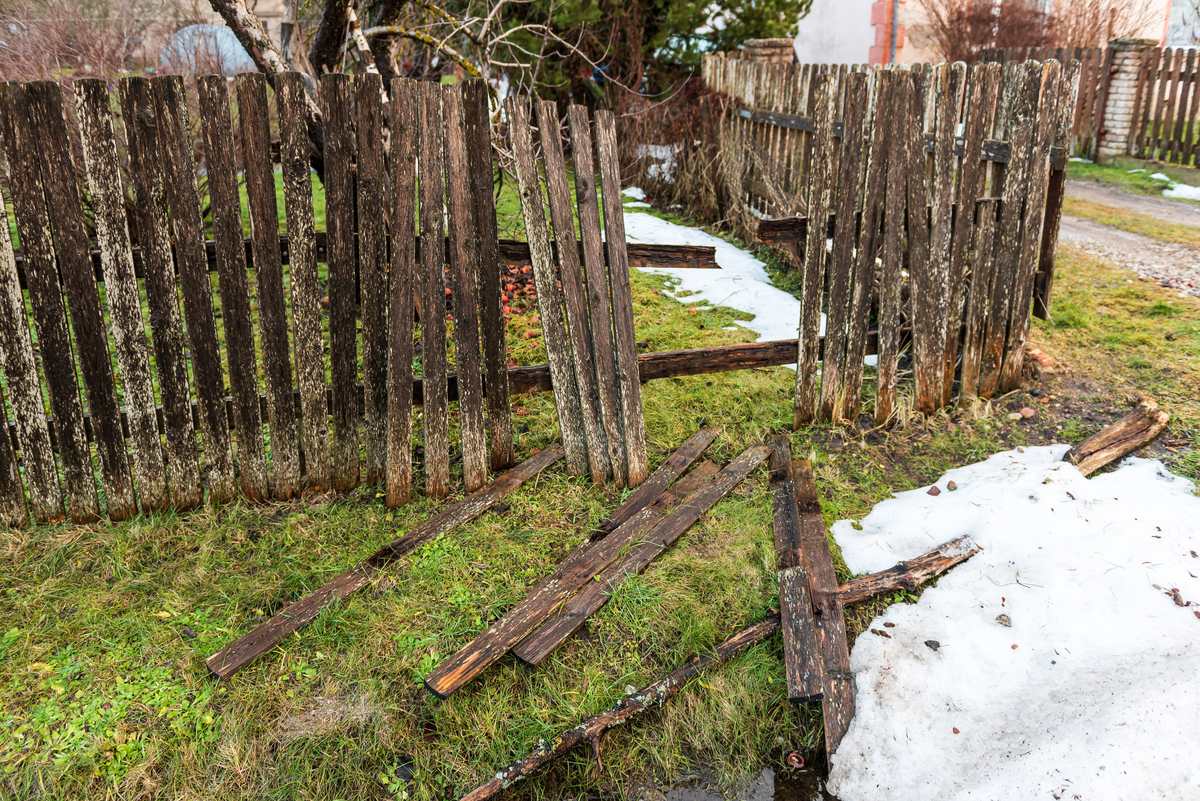
Neighbor disputes in Michigan: water, noise, trees, fences and zoning
I am Mitchell Bisson, a Grand Rapids real estate lawyer. I have litigated for over 15 years. This page is about the fights that start next door: runoff that floods a yard, a barn that smells, branches over a fence, a fence nobody wants to pay for, a zoning violation across the street or a variance you did not want granted. It explains the rules Michigan courts and statutes use for each, which ones carry short deadlines, and what a court can and cannot order. I represent homeowners in these disputes, whether you have the problem or are accused of causing it. I do not promise outcomes.
The short answer. The rule depends on what the neighbor is doing. The owner of lower land must accept surface water in its natural flow, but the owner of higher land may not increase and concentrate it. Boylan v. Fifty Eight Ltd. Liability Co., 289 Mich. App. 709, 726-727 (2010). Noise, odor and dust are handled as a private nuisance, which takes significant harm from an unreasonable interference. Adams v. Cleveland-Cliffs Iron Co., 237 Mich. App. 51, 67 (1999). A zoning violation is a nuisance per se, but a private neighbor who sues over it must show damages different from the public’s. MCL 125.3407; Sakorafos v. Charter Township of Lyon, 349 Mich. App. 176 (2023). A zoning board of appeals decision must be appealed within the earlier of 30 days after the signed written decision or 21 days after the minutes are approved. MCL 125.3606(3). Nothing here predicts how a particular dispute will end.
Most neighbor disputes start small and become legal because nobody answers the first complaint. Someone regrades a lot and water starts to stand against a foundation. A hedge is cut back, then cut too far. A neighbor ignores a zoning hearing notice and learns later that the variance was granted. In Grand Rapids, Kentwood, Wyoming and the townships around them, the first question is whether this is a private dispute between two owners, a violation of a local ordinance, or both. The answer decides who can sue, where, and how fast.
The second question is time. Some neighbor claims run for three years from the wrong, and a zoning appeal can be lost in 21 days. I look at the dates first. The third is what you want, because a court can order some things and cannot order others, and the cheapest route is often a written agreement.
Neighbor problems at a glance
The table sets out the problems I see most often and the rule or deadline that governs. How each applies to your property depends on the facts and the documents.
| Problem | What the law looks at | Time limit or key rule | Authority |
|---|---|---|---|
| Surface water from a higher lot | Whether the higher owner changed conditions and increased and concentrated the volume and velocity of the water | The lower owner accepts water in its natural flow. The rule binds adjoining landowners, not a contractor who owns no neighboring land | Boylan v. Fifty Eight Ltd. Liability Co., 289 Mich. App. 709, 726-727 (2010) |
| Noise, odor, dust, smoke or light | Significant harm from an unreasonable interference with use or enjoyment of your land | A private nuisance, not trespass. The plaintiff proves the damages | Adams v. Cleveland-Cliffs Iron Co., 237 Mich. App. 51, 67 (1999); Adkins v. Thomas Solvent Co., 440 Mich. 293, 302-303 (1992) |
| A neighbor’s zoning violation | Whether the use violates the ordinance, and whether you can show damages different from the public’s | A nuisance per se that the court shall order abated. A private plaintiff needs special damages | MCL 125.3407; Sakorafos v. Charter Township of Lyon, 349 Mich. App. 176 (2023) |
| A variance granted to a neighbor | Whether you took part, claim a protected interest and can show special damages | Appeal to circuit court within the earlier of 30 days after the signed decision or 21 days after the minutes are approved | MCL 125.3606(3); Saugatuck Dunes Coastal Alliance v. Saugatuck Township, 509 Mich. 561 (2022) |
| A nearby farm | Whether it is a farm operation that follows generally accepted agricultural and management practices | The farm bears the burden of proving the Right to Farm Act defense | MCL 286.473; Lima Township v. Bateson, 302 Mich. App. 483, 496 (2013) |
| Branches over your yard | How far the branches overhang and how far the cutting went | Old authority allows cutting to the line and no further | Hickey v. Michigan Central Railroad Co., 96 Mich. 498, 501-504 (1893) |
| A fence that holds animals | Who built it and who now uses it to confine animals | The builder pays; the neighbor who uses it pays a proportionate share or builds his own | MCL 43.53; MCL 43.55 |
| Harassment by a neighbor | Facts that amount to stalking: a willful course of repeated or continuing harassment | Petition to the family division of circuit court for a personal protection order | MCL 600.2950a(1); MCL 750.411h |
| Damage claims | When the wrong was done | 3 years for injury to property. The claim accrues when the wrong was done, not when damage results | MCL 600.5805(2); MCL 600.5827; Township of Fraser v. Haney, 509 Mich. 18 (2022) |
| A small money claim | Whether the claim is only for money | Small claims is confined to money cases of $7,000 or less | MCL 600.8401 |
Water and drainage
Surface water is the dispute I hear about most. Michigan’s rule cuts both ways. The Court of Appeals put it this way: “The owner of the lower or servient estate must accept surface water from the upper or dominant estate in its natural flow.” The next sentence limits the higher owner: “By the same token, the owner of the dominant estate may not, by changing conditions on his land, put a greater burden on the servient estate by increasing and concentrating the volume and velocity of the surface water.” Boylan v. Fifty Eight Ltd. Liability Co., 289 Mich. App. 709, 726-727 (2010).
The natural flow of the land is the baseline. If your lot sits lower, you cannot demand that the neighbor stop water that has always crossed the line. If the neighbor has added a driveway, a downspout tied into a pipe, a fill pad or new grading, and the water now arrives in a concentrated stream that did not exist before, the rule gives you a claim. So I ask what changed on the higher lot, and when. Photographs from before the work, listing photos from a sale and old survey grades can show it.
The rule is one between landowners. In Boylan, a contractor installing a water main for a township had eliminated a swale that protected the plaintiff’s property from runoff. The Court of Appeals affirmed summary disposition of the surface water claim against the contractor, because it owned no neighboring land, but reversed summary disposition of the negligence and common-law trespass claims. Boylan v. Fifty Eight Ltd. Liability Co., 289 Mich. App. 709, 726-727 (2010). If the problem began with a builder or a paving crew, the claim against the person who did the work has to rest on other theories.
Trespass requires an unauthorized direct or immediate intrusion of a physical, tangible object onto land over which the plaintiff has a right of exclusive possession, and Boylan adds that surface-water diversion may effect such an intrusion. Boylan v. Fifty Eight Ltd. Liability Co., 289 Mich. App. 709, 723 (2010). Whether a diversion qualifies depends on how the water was sent onto your land. A pipe that discharges at your lot line is a different fact pattern from water that drifts across a regraded yard. If you are the owner accused of causing the problem, the same rule helps you, because the natural flow is the baseline for both sides.
Noise, odor, dust, smoke and light: the nuisance claim
A private nuisance is “a nontrespassory invasion of another’s interest in the private use and enjoyment of land.” The Supreme Court described it as a doctrine that evolved to resolve conflicts between neighboring land uses, whose essence is the protection of an owner’s or occupier’s reasonable comfort in occupation of the land. Adkins v. Thomas Solvent Co., 440 Mich. 293, 302-303 (1992).
The bar is not low. To prevail in nuisance, a possessor of land must prove significant harm resulting from the defendant’s unreasonable interference with the use or enjoyment of the property, and where the harm is noise, vibration, dust, smoke, soot or fumes, nuisance rather than trespass is the normal vehicle. The plaintiff must prove all damages, and they are awarded only to the extent that the defendant’s conduct was unreasonable. Adams v. Cleveland-Cliffs Iron Co., 237 Mich. App. 51, 67 (1999). The Supreme Court has also explained that de minimis annoyances were not actionable and only a substantial interference with the use and enjoyment of property would support an action. Adkins v. Thomas Solvent Co., 440 Mich. 293, 310 (1992).
A barking dog on a Tuesday or a late party is usually not a lawsuit. A kennel that runs all night, fumes that reach a bedroom or floodlights aimed at your windows every night for a year start to look like significant harm. I ask for a log: dates, times, how long it lasted, what it did to your sleep or your use of the yard, photographs, video and the names of others who noticed. The accused owner has real answers too, such as that the effect is small, and I look at the record from that side as well.
A nearby farm and the Right to Farm Act
Michigan’s Right to Farm Act protects some farms from nuisance claims. A farm or farm operation shall not be found to be a public or private nuisance if it conforms to generally accepted agricultural and management practices according to policy determined by the Michigan commission of agriculture. MCL 286.473(1). The Act also protects a farm that existed before a change in the land use or occupancy of land within 1 mile of the farm land, if the farm would not have been a nuisance before that change. MCL 286.473(2).
The definitions limit who can use the Act. A “farm” is land, plants, animals, buildings and equipment used in the commercial production of farm products, and a “farm operation” includes the generation of noise, odors, dust and fumes in connection with that production. MCL 286.472(a), (b). The Court of Appeals treats the Act as a defense and puts the burden on the party relying on it to prove the conduct is protected, in a two-part inquiry: is it a farm or farm operation, and does it conform to the generally accepted practices. Lima Township v. Bateson, 302 Mich. App. 483, 496 (2013). For a neighbor, the questions are what the farm is actually doing and which published practice standard applies to it.
Zoning: a neighbor’s violation, and a neighbor’s variance
The neighbor is violating the ordinance. A use of land or a structure used, erected, altered, razed or converted in violation of a zoning ordinance adopted under the Zoning Enabling Act is a nuisance per se, and the court shall order the nuisance abated. MCL 125.3407. The ordinance must designate the official who enforces it, so a written complaint to that official is usually the first step. A private neighbor who wants to sue has a harder road: a private citizen may sue to abate a zoning-violation nuisance only on a showing of damages of a special character distinct and different from the injury suffered by the public generally. Towne v. Harr, 185 Mich. App. 230, 232 (1990). In Ansell, residents objecting to wind turbines had not specified which of them would experience noise or flicker above ordinance levels, so they had not distinguished themselves from the public. Ansell v. Delta County Planning Commission, 332 Mich. App. 451 (2020).
In Sakorafos, the Court of Appeals held that the “aggrieved party” test used for zoning board appeals is the wrong test for a nuisance per se claim, that the harm need not be unique to one plaintiff, and that adjacent ownership supports a showing of special damages. Sakorafos v. Charter Township of Lyon, 349 Mich. App. 176 (2023).
The neighbor asked for a variance. A zoning board of appeals may grant a nonuse variance for practical difficulties, or a use variance for unnecessary hardship, in the way of carrying out the strict letter of the ordinance. MCL 125.3604(7). Notice of the hearing is published at least 15 days before, goes to the owners of the property in question and to persons assessed and occupants within 300 feet, and must say when and where written comments will be received. MCL 125.3103(1), (2), (4). If that notice reached you, the comment deadline and the hearing date are the dates that matter.
The board’s decision is final, subject to an appeal to the circuit court by a party aggrieved. MCL 125.3605. The court reviews the record to decide whether the decision complies with the constitution and laws of the state, is based on proper procedure, is supported by competent, material and substantial evidence, and is a reasonable exercise of the board’s discretion. MCL 125.3606(1). The appeal must be filed within whichever comes first: 30 days after the board issues its decision in writing signed by the chairperson (or by the members if there is no chairperson), or 21 days after the board approves the minutes of its decision. MCL 125.3606(3).
Who counts as an aggrieved party was settled in Saugatuck Dunes. The appellant must have taken a position in the proceedings, such as by a letter or oral public comment; must claim a legally protected interest likely to be affected; and must provide some evidence of special damages “that is different in kind or more significant in degree than the effects on others in the local community.” Saugatuck Dunes Coastal Alliance v. Saugatuck Township, 509 Mich. 561 (2022). The Court overruled earlier decisions, including Olsen, only to the extent they required ownership of property or limited the comparison to similarly situated property owners. Saugatuck Dunes Coastal Alliance v. Saugatuck Township, 509 Mich. 561 (2022). A neighbor who spoke or wrote at the hearing and can describe a specific effect on his or her own property fits that test, and a neighbor who stayed silent has a participation problem.
Trees and branches
The authority I can point to on overhanging branches is old and narrow. In Hickey, a railroad’s employees trimmed the branches of the plaintiff’s trees up to the fence line. The Supreme Court recited a treatise statement that branches extending over another’s premises are a nuisance that the other owner may abate by sawing them off, and another that the neighbor may not cut down the tree or cut beyond the extent to which the branches overhang his own soil. Hickey v. Michigan Central Railroad Co., 96 Mich. 498, 501-504 (1893).
Hickey is a single decision from 1893 between a landowner and a railroad. It supports the point that cutting overhanging branches to the boundary, and no further, is treated as abating a nuisance. It does not address a tree whose trunk stands on the line, damage to a tree’s health, a local ordinance or the cost of the work. If you intend to cut, I tell clients to stay on their own side of the line, cut no more than what overhangs, and give written notice first as a matter of caution.
Fences and who pays for them
Michigan’s fence statute is narrower than most people expect. It defines a “fence” as a structure or natural barrier sufficient to confine an animal. MCL 43.51. The owner who builds a fence pays for its construction and maintenance, and an adjoining owner or tenant who uses it to restrain or contain animals must pay the builder a proportionate share of its current value, or may build his own. MCL 43.53. A township fence viewer, engaged by written request and a $25.00 payment for each day of service, can decide what percentage of the cost the neighbor owes and can assess damage an animal does to a fence, and a person may appeal the decision to a court. MCL 43.54(1), (2); MCL 43.55(1), (4).
The statute says a fence viewer is not charged with settling boundary disputes or determining the location of a boundary, which are settled under state law. MCL 43.55(3). A privacy fence or a fence on the wrong side of the line is therefore not solved by calling the fence viewer. Those disputes turn on the deed, the survey, any local ordinance and any recorded restrictions.
Harassment by a neighbor and personal protection orders
Some neighbor disputes stop being about property. Michigan lets an individual petition the family division of circuit court for a personal protection order to restrain conduct prohibited by the stalking statutes. The court may not grant relief unless the petition alleges facts that constitute stalking, and relief may be granted whether or not the neighbor has been charged or convicted. MCL 600.2950a(1). Stalking is a willful course of conduct involving repeated or continuing harassment that would cause a reasonable person to feel terrorized, frightened, intimidated, threatened, harassed or molested and that actually causes the victim to feel that way. A course of conduct is a series of two or more separate noncontinuous acts evidencing a continuity of purpose. MCL 750.411h(1). A property line argument or a single angry exchange is not stalking.
A court may not issue an order without notice unless specific facts in a verified complaint, motion or affidavit show that immediate and irreparable injury will result from the delay. MCL 600.2950a(12). An order issued that way is valid for not less than 182 days, and the respondent may move to modify or rescind it within 14 days after service or actual notice. MCL 600.2950a(13). A court may not issue a mutual order. MCL 600.2950a(8). If you are served with a petition, the 14-day window matters.
How long you have
The period for an action to recover damages for injury to property is 3 years after the injury, except as otherwise provided. MCL 600.5805(2). In cases not covered by the specific accrual sections, the claim accrues when the wrong was done, regardless of when damage results. MCL 600.5827. A neighbor who waits years after a one-time act, such as a grading project, can expect the argument that the claim accrued when the work was done.
Ongoing conditions are harder. In Fraser, a township sued to stop hogs being kept in a commercial zone after about a decade. The Supreme Court held the suit was not barred because it sought injunctive relief for violations within the limitation period, and said that “After Garg, a plaintiff in Michigan may not revive stale claims even if the claims are part of a series of ‘continuing violations.'” Township of Fraser v. Haney, 509 Mich. 18 (2022). That was a township’s claim against a present zoning violation, not a neighbor’s damages claim, and I have not found a published decision that settles how far it carries a private damages claim. So I treat the date of the earliest harm as the deadline to measure from. A recurring discharge may support a claim for what happened recently or a request to stop a present condition, but I do not recommend assuming it keeps old harm alive.
What a court can order, and what it cannot
Money. In nuisance, damages must be proved and are awarded only to the extent the conduct was unreasonable. Adams v. Cleveland-Cliffs Iron Co., 237 Mich. App. 51, 67 (1999). An order to stop or remove. A court shall order a zoning-violation nuisance abated. MCL 125.3407. Otherwise an injunction may not be granted before a hearing on a motion for a preliminary injunction, where the party seeking it has the burden. MCR 3.310(A)(1), (4). A temporary restraining order without notice requires specific facts showing immediate and irreparable injury and expires within the time the court sets, not more than 14 days unless extended for good cause. MCR 3.310(B)(1), (3). The court may require security for the costs and damages of a party found to have been wrongfully enjoined. MCR 3.310(D)(1). That is a serious filing with a bond risk, and I say so before we file.
Small claims. The small claims division is confined to cases for the recovery of money of $7,000 or less since January 1, 2024. MCL 600.8401. A request for removal of an encroachment or an end to a nuisance is outside what the statute describes.
Defenses and answers I look at
- The natural flow. A water claim fails when the water came the way it always did.
- Significant harm and unreasonableness. A nuisance claim needs both. Adams v. Cleveland-Cliffs Iron Co., 237 Mich. App. 51, 67 (1999).
- Special damages and participation. A zoning suit or appeal needs harm different from the community’s, and an appeal needs a position taken in the proceedings. Sakorafos v. Charter Township of Lyon, 349 Mich. App. 176 (2023); Saugatuck Dunes Coastal Alliance v. Saugatuck Township, 509 Mich. 561 (2022).
- The Right to Farm Act. It protects commercial farm operations that follow the published practices, and the farm must prove it. Lima Township v. Bateson, 302 Mich. App. 483, 496 (2013).
- The wrong theory. A noise complaint pleaded as trespass uses the wrong theory. Adams v. Cleveland-Cliffs Iron Co., 237 Mich. App. 51, 67 (1999).
Smaller steps that often come first
A written demand. A short, factual letter that names the problem, the dates and what you want resolves many of these disputes and creates a record. I do not send one until I know what I want it to say. Mediation. Michigan created a community dispute resolution program to provide conciliation, mediation or other voluntary dispute resolution as an alternative to the judicial process. MCL 691.1553. A mediator is an impartial, neutral person who has no authoritative decision-making power. MCL 691.1552(f). All civil cases are also subject to alternative dispute resolution unless a statute or court rule provides otherwise. MCR 2.410(A)(1). Mediation works only if both neighbors take part, and a signed written agreement that states the line, the cost split or the maintenance duty is worth far more than a verbal truce.
Small claims. A small claims case starts with an affidavit filed with the district court clerk, which must tell both parties, in boldface type, about the right to removal before trial to the general civil division and the rights waived by staying in small claims. MCL 600.8402(1), (3).
How I handle a neighbor dispute
- Sort out the claim. Water, nuisance, zoning, fence or harassment: each has its own rule and clock.
- Fix the dates. I build a timeline from the first change on the neighbor’s land to today and mark every deadline.
- Gather the proof. Photographs, video, logs, grading and survey records, hearing notices, permits and messages. I look at the site when I can.
- Read the documents. Deeds, recorded restrictions, the zoning ordinance and any board minutes or approvals.
- Tell you the weak points. That includes whether you can show harm different from the neighbors around you.
- Try the written route first. A demand letter, a complaint to the zoning official or an offer to mediate often costs less than a lawsuit.
- File when the facts and the clock require it. That may be a complaint, an injunction motion, a zoning appeal, a protection order petition or a small claims affidavit.
Ways a neighbor dispute may end without a trial
- A signed agreement on a fix, a cost split or a maintenance duty, recorded if it affects the land.
- A drainage repair by the higher owner, with the past damage paid or released.
- Enforcement or compliance after a complaint to the zoning official.
- A consent order that states what each side will and will not do.
What I need from you
Bring your deed, any survey and your title policy; dated photographs and video; a written log of each incident; and estimates or receipts for repairs. For water, bring photographs from before the neighbor’s work and the dates of any construction. For zoning, bring the hearing notice, the minutes, anything you said or sent to the board, and the written decision. Bring every letter, email and text with the neighbor. Do not cut, dig, regrade, block a drain or confront the neighbor until we have talked, and do not ignore a hearing notice or court paper, because some of these deadlines are measured in days.
Where your Kent County neighbor dispute will be heard
I represent clients in Grand Rapids, Kentwood, Grandville, Wyoming and across Kent County. Under MCL 600.8301(1), the district court has exclusive jurisdiction in civil actions when the amount in controversy does not exceed $25,000. Michigan law sets the Kent County district courts by municipality. The 61st District Court serves the city of Grand Rapids, the 59th serves the cities of Grandville and Walker, the 62A serves the city of Wyoming and the 62B serves the city of Kentwood. MCL 600.8128a; MCL 600.8130(1)-(3). The 63rd District Court serves the rest of Kent County outside those five cities. MCL 600.8130(4). Circuit courts have original jurisdiction over civil claims not assigned exclusively to another court, and for Kent County the circuit court is the 17th Judicial Circuit. MCL 600.605; MCL 600.518. A zoning board of appeals decision is appealed to the circuit court for the county where the property is located, and a protection order petition goes to the family division of circuit court. MCL 125.3606(1); MCL 600.2950a(1).
Why people hire me for a Michigan neighbor dispute
You work directly with me, the lawyer handling your case. I tell you where your position is strong and weak, which deadlines are running and what each path is likely to cost before you choose one. I act for homeowners in these disputes, so I know what the other side will argue. I do not promise outcomes. My fee depends on the work involved, and we talk about it at the consultation before you decide whether to hire me.
Questions I hear from people with a neighbor dispute in Michigan
Water from my neighbor’s higher lot runs onto my land. When can the neighbor be held responsible?
Under Michigan’s surface water rule, the owner of lower land must accept surface water from higher land in its natural flow. The owner of the higher land may not change conditions on that land to increase and concentrate the volume and velocity of the water and so put a greater burden on the lower owner. The Court of Appeals has said the rule applies to adjoining landowners and has never been extended to a party that neither owns nor controls the higher land. A diversion of surface water onto a neighbor’s land may also support a trespass claim.
My neighbor is violating the zoning ordinance. Can I sue the neighbor myself?
Possibly, but not just because the ordinance is violated. A use of land in violation of a zoning ordinance adopted under the Zoning Enabling Act is a nuisance per se under MCL 125.3407, and the court shall order it abated. The Court of Appeals has held that a private person may sue to abate it only by showing damages of a special character distinct and different from the injury suffered by the public generally. An adjoining owner has the better position, and the harm does not have to be unique to one owner.
Can I sue a nearby farm over odor or noise, and can the farm rely on the Right to Farm Act?
The Right to Farm Act, MCL 286.473, provides that a farm or farm operation shall not be found to be a public or private nuisance if it conforms to generally accepted agricultural and management practices set by the Michigan commission of agriculture. Subsection (2) adds a protection for a farm that existed before a change in land use or occupancy within 1 mile, if it would not have been a nuisance before the change. The Court of Appeals has held that the party relying on the Act has the burden of proving the defense.
A neighbor got a zoning variance and I object. Can I appeal the decision, and how soon?
A party aggrieved by a zoning board of appeals decision may appeal to the circuit court under MCL 125.3605 and 125.3606, within the earlier of 30 days after the board issues its signed written decision or 21 days after it approves the minutes of the decision. In Saugatuck Dunes (2022), the Michigan Supreme Court held that an aggrieved party must have taken a position in the proceedings, claim a legally protected interest likely to be affected, and give some evidence of special damages different in kind or more significant in degree than the effect on others in the community.
My neighbor’s drainage work or encroachment has been damaging my land for years. Is it too late to sue?
Not necessarily. The general period for an action to recover damages for injury to property is 3 years (MCL 600.5805(2)), and a claim accrues when the wrong was done regardless of when damage results (MCL 600.5827). In Twp of Fraser v Haney (2022), the Michigan Supreme Court treated an ongoing use of land as a wrong committed for as long as it continues, so claims for what happened inside the limitation period were timely. The same opinion states that after Garg a plaintiff may not revive stale claims through a series of continuing violations.
A neighbor’s tree branches hang over my yard. Can I cut them back to the property line?
Michigan authority on this is old and narrow. In Hickey v Michigan Central R Co (1893), the Supreme Court dealt with a landowner whose trees had branches extending over a railroad’s right of way. The Court recited the treatise statement that branches extending over another’s premises are a nuisance that the other owner may abate by sawing them off, and held that a landowner who knew the company claimed the overhang was a nuisance and wanted it removed could not insist on further notice. The cutting there was only up to the fence line.
A neighbor keeps harassing me. Can I get a personal protection order?
Michigan allows a petition for a personal protection order to restrain conduct that is prohibited as stalking under MCL 750.411h or 750.411i, or conduct prohibited by 750.411s, under MCL 600.2950a. The petition goes to the family division of circuit court, and the court may not grant relief unless the petition alleges facts that constitute stalking or the other listed conduct. Relief does not depend on the neighbor having been charged or convicted. Ordinary neighborhood friction, without a course of conduct that fits the stalking definition, is not enough.
Can a neighbor dispute go to small claims court, or is there mediation available first?
Small claims is limited to money claims. Under MCL 600.8401, the district court small claims division handles cases for the recovery of money that does not exceed $7,000 (the amount since January 1, 2024), so it cannot order a neighbor to remove a fence, stop a use or trim a tree. Michigan also has a community dispute resolution program created to provide conciliation, mediation or other voluntary dispute resolution as an alternative to the judicial process.
Related Michigan pages
- Grand Rapids real estate attorney
- Boundary and easement disputes
- Easements and private roads
- Quiet title and adverse possession
- Grand Rapids civil litigation attorney
- Boundaries, adverse possession and easements
- Real estate FAQs
- Michigan legal FAQs
- premises liability injury claims
I represent homeowners in neighbor disputes in Kent County and West Michigan. Contact me 24/7 by phone or email. Your Rights, My Fight! Call for a free initial consultation.
Big-Firm Power. Street-Level Grit.
Law Offices of Mitchell S. Bisson, 2828 Kraft Ave SE, Suite 295, Grand Rapids, MI 49512, serving Kent County and West Michigan.
This page provides general information about Michigan law and is not legal advice. Reading it does not create an attorney-client relationship. Laws change and every case turns on its own facts. Consult a licensed attorney about your specific situation.