
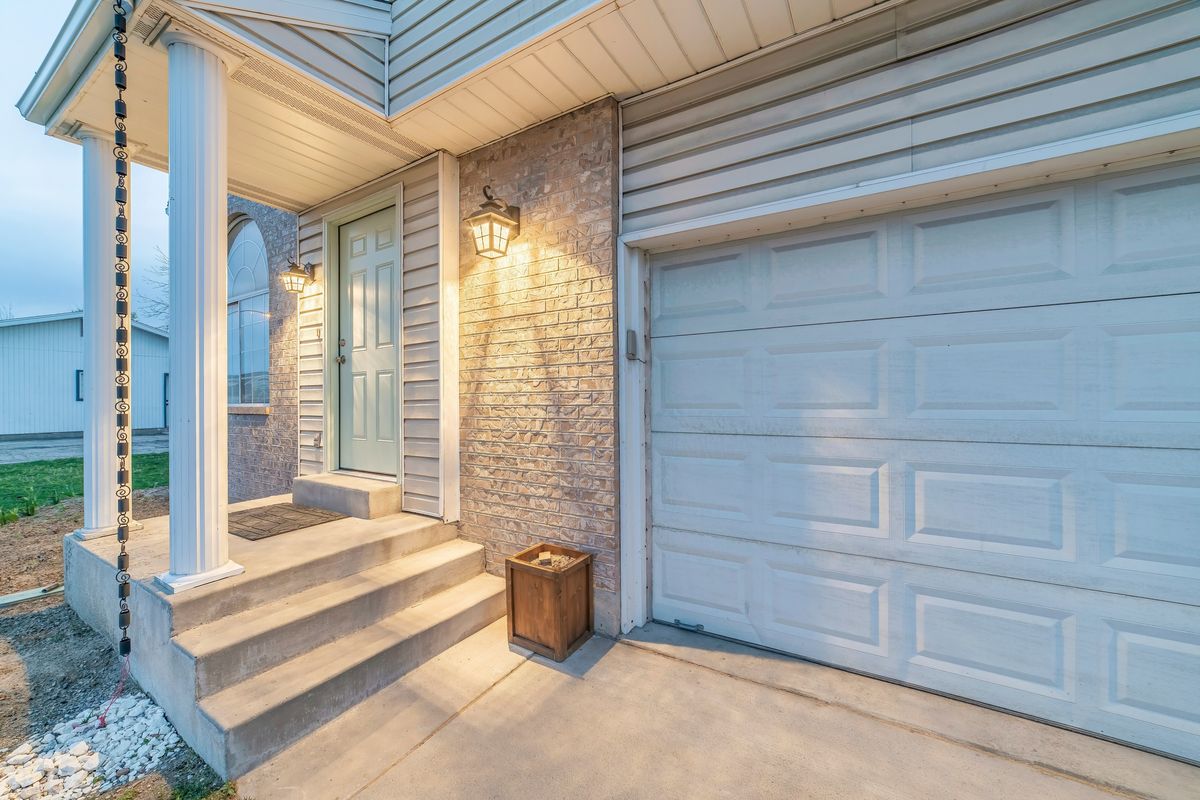
Housing and public accommodation discrimination claims turn on which statute covers the landlord, the business and the trait
I am Mitchell Bisson, a Grand Rapids civil rights lawyer. I have litigated for over 15 years. This page covers discrimination by Michigan landlords, condo and homeowners associations, real estate agents, businesses and public agencies: a refused rental, a no-kids rule, a rental ad, a denied disability modification, a landlord who rejects housing vouchers, and a store or restaurant that treats a customer differently because of race. I represent the person who was treated unfairly. I tell you where an exemption or a missing record weakens a claim, and I do not promise outcomes.
The short answer. Several statutes can apply to the same event. The federal Fair Housing Act makes it unlawful to refuse to rent, or to discriminate in terms, conditions or services, because of race, color, religion, sex, familial status or national origin, and it separately covers handicap. 42 U.S.C. 3604. Michigan’s Elliott-Larsen Civil Rights Act covers a longer list of traits in real estate, and since April 2, 2025 it also bars a landlord of five or more rental units from discriminating based on source of income. MCL 37.2502(1), (3), (4). Michigan’s Persons with Disabilities Civil Rights Act covers disability. MCL 37.1502. Businesses and public agencies are covered by the public accommodation provisions of the same Michigan statutes. MCL 37.2302. Some small owners are exempt from parts of these laws, and under the federal Act the exemption does not reach the advertising rule. Nothing here predicts how a case will end.
I start every call by sorting the facts into a statute, because the traits covered, the exemptions, the deadlines and the remedies differ. The table is how I do that.
Which law covers which situation
| Situation | Statute | Traits or subject covered |
|---|---|---|
| Rental or sale of a dwelling | 42 U.S.C. 3604(a), (b) | Race, color, religion, sex, familial status, national origin |
| Disability in housing | 42 U.S.C. 3604(f); MCL 37.1502; MCL 37.1506a | Handicap or disability, including reasonable modifications and accommodations |
| Real estate transaction in Michigan | MCL 37.2502(1) | Religion, race, color, national origin, age, sex, sexual orientation, gender identity or expression, familial status, marital status |
| Rental by a larger Michigan landlord | MCL 37.2502(3), (4) | Source of income, including vouchers and emergency rental assistance; does not apply to a landlord of fewer than 5 rental units |
| Retaliation for complaining | 42 U.S.C. 3617; MCL 37.2701 | Coercion, intimidation, threats, interference, retaliation |
| Store, restaurant, health or recreation provider, public agency | MCL 37.2302; MCL 37.1302 | Michigan list of traits; disability under the separate act |
| Listed establishments such as lodging and restaurants | 42 U.S.C. 2000a | Race, color, religion, national origin |
| Contracts, including buying goods | 42 U.S.C. 1981 | Race |
Michigan housing law after 2023 PA 6 and 2024 PA 180
The housing section of the Elliott-Larsen Civil Rights Act forbids a person engaging in a real estate transaction, and a broker or salesperson, to refuse to engage in the transaction, discriminate in its terms or conditions, refuse a bona fide offer, refuse to negotiate, misstate availability, publish a discriminatory ad or discriminate in brokering or appraising, based on religion, race, color, national origin, age, sex, sexual orientation, gender identity or expression, familial status or marital status. MCL 37.2502(1). The statute’s history shows that 2023 PA 6 amended it effective February 13, 2024, and that 2024 PA 180 amended it effective April 2, 2025.
The 2025 amendment added a section on source of income. A landlord of a rental unit may not, based on the source of income of an otherwise eligible prospective or current tenant, deny or terminate a tenancy, discriminate in price, terms, conditions or fees, make a unit unavailable, misstate availability, discourage the rental, or publish an ad that states a preference, limitation or requirement based on any source of income. MCL 37.2502(3)(a) to (d), (g), (h). It also bars distinctions based on a tenant’s use of emergency rental assistance, addresses how rent vouchers and subsidies are treated when a landlord sets an income threshold, and prohibits assisting another person to violate the subsection and coercing or intimidating a person who exercises these rights. MCL 37.2502(3)(e), (f), (i), (j). The subsection does not apply to a person who, including all related entities, is a landlord of fewer than 5 rental units in this state. MCL 37.2502(4). If a landlord told you the unit was unavailable once the landlord learned you pay with a voucher, I need the ad, the messages, the date and the number of units the landlord and its related companies own.
Section 503 says section 502 does not apply to the rental of a unit in a building with no more than two housing accommodations when the owner or the owner’s immediate family lives in one, to the rental of a room in a single-family dwelling when the lessor lives there, or to the rental for not more than 12 months of the owner’s own home that was occupied for at least three months before the tenant; and subsection (5) of section 502 states that the section is subject to section 503. MCL 37.2503(1)(a), (b). The federal exemptions are different. Section 3604 other than the advertising provision does not apply to a single-family house sold or rented by an owner of no more than three such houses without a broker and without a discriminatory ad, or to a unit in an owner-occupied building of no more than four families. 42 U.S.C. 3603(b). Whether an exemption fits depends on who owns the property, how many units there are, whether an agent was used and where the owner lives, so I ask those questions first.
Disability in housing: modifications, accommodations and who must prove what
The Fair Housing Act treats a refusal to permit reasonable modifications at the disabled person’s expense, and a refusal to make reasonable accommodations in rules, policies, practices or services, as discrimination. 42 U.S.C. 3604(f)(3)(A), (B). Michigan’s Persons with Disabilities Civil Rights Act has parallel provisions for real estate transactions. MCL 37.1506a(1)(a), (b). The Sixth Circuit lists disparate treatment, disparate impact, failure to make a reasonable accommodation and failure to permit a reasonable modification as theories available to a disabled plaintiff. Hollis v. Chestnut Bend Homeowners Association, 760 F.3d 531, 538 (6th Cir. 2014). It also places on the plaintiff the burden at trial to show that the request is both reasonable and necessary. Hollis v. Chestnut Bend Homeowners Association, 760 F.3d 531, 543 (6th Cir. 2014). That allocation is why I help a client put the request in writing before anything else happens: what change or exception is needed, why the disability makes it necessary, and the date it was sent. The landlord’s answer, or silence, becomes the evidence.
Retaliation, interference and what a neutral policy can do
Section 3617 makes it unlawful to coerce, intimidate, threaten or interfere with a person exercising fair housing rights or aiding another person who does. 42 U.S.C. 3617. The Sixth Circuit, in a Michigan case, rejected a requirement of potent force or duress and held that the provision reaches actors in a position directly to disrupt the exercise of a protected right who act with discriminatory animus, although it affirmed judgment for the defendants on that record. Michigan Protection and Advocacy Service, Inc. v. Babin, 18 F.3d 337, 347 (6th Cir. 1994). Michigan separately bars retaliating against a person who opposed a violation or took part in a proceeding, and coercing or interfering with a person exercising rights under the act. MCL 37.2701(a), (f). A nonrenewal, a new fee or an eviction notice soon after a complaint is the pattern I look for, and the dates matter most.
A neutral policy can also be challenged. The Supreme Court held that disparate-impact claims are cognizable under the Fair Housing Act, and that a claim relying on a statistical disparity must fail if the plaintiff cannot point to a defendant’s policy or policies causing that disparity. Texas Department of Housing and Community Affairs v. Inclusive Communities Project, Inc., 576 U.S. 519 (2015). HUD has proposed to change the regulation that implements the theory. In 91 Fed. Reg. 1475 (Jan. 14, 2026), it proposed to remove and reserve its discriminatory effects regulation, 24 C.F.R. 100.500, and a supplemental proposed rule published on August 10, 2026 reopened the comment period and proposed matching changes to HUD’s Title VI regulations. 91 Fed. Reg. 51416 (Aug. 10, 2026). No final rule on the subject had been published when this page was reviewed in October 2026. A proposed rule does not change the statute or the Supreme Court’s decision, but this status can change, and I recheck it before relying on it in any case. This page does not address whether Michigan’s statutes recognize the same theory.
Businesses, public agencies and race claims in stores and restaurants
The Elliott-Larsen Civil Rights Act defines a place of public accommodation broadly, as a business or an educational, refreshment, entertainment, recreation, health or transportation facility of any kind, whether licensed or not, whose goods and services are offered to the public, and it adds public services run by or for the state or a political subdivision. MCL 37.2301(a), (b). It bars denying full and equal enjoyment of those places because of religion, race, color, national origin, age, sex, sexual orientation, gender identity or expression, or marital status. MCL 37.2302(a), (b). Disability is covered by the Persons with Disabilities Civil Rights Act, which bars denying full and equal enjoyment because of a disability that is unrelated to the person’s ability to use and benefit from the goods and services. MCL 37.1302(a). The federal public accommodations statute covers fewer establishments and traits. A private suit under it is for preventive relief, and where state law prohibits the practice and a state authority can act, written notice to that authority is required 30 days before suing. 42 U.S.C. 2000a-3(a) to (c).
Race claims against a business can also be brought under section 1981, which protects the making and enforcement of contracts, including the enjoyment of all benefits, privileges, terms and conditions, against private impairment. 42 U.S.C. 1981. For a commercial establishment the Sixth Circuit allows proof that the customer was deprived of services that similarly situated customers received, or received services in a markedly hostile manner that a reasonable person would find objectively discriminatory. Christian v. Wal-Mart Stores, Inc., 252 F.3d 862, 872 (6th Cir. 2001). The plaintiff must plead and ultimately prove that, but for race, the plaintiff would not have suffered the loss of a legally protected right. Comcast Corp. v. National Association of African American-Owned Media, 589 U.S. 327 (2020). Race discrimination in the sale or rental of property is also barred by 42 U.S.C. 1982, which reaches private as well as public conduct. Jones v. Alfred H. Mayer Co., 392 U.S. 409, 413 (1968). For a store or restaurant I want receipts, video, the names of employees, how other customers were treated and any statements made.
Deadlines and choosing between HUD, the state and court
The federal deadlines are in the statute. A complaint to HUD must be filed not later than one year after the alleged discriminatory housing practice occurred or terminated. 42 U.S.C. 3610(a)(1). A civil action may be started not later than 2 years after the occurrence or termination of the practice, and the computation of that period does not include time during which an administrative proceeding based on the practice was pending. 42 U.S.C. 3613(a)(1). An action may be filed whether or not a HUD complaint was filed, but not after the person consents to a conciliation agreement, except to enforce it, and not after an administrative law judge has begun a hearing on a HUD charge. 42 U.S.C. 3613(a)(2), (3). For the Michigan statutes I confirm the period that applies at the start and calendar the shortest one.
Remedies differ by statute. The federal Act allows actual and punitive damages and injunctive relief, and a court may allow the prevailing party a reasonable attorney fee and costs. 42 U.S.C. 3613(c). The Elliott-Larsen Civil Rights Act allows an action for injunctive relief or damages, and damages include reasonable attorney’s fees. MCL 37.2801. Relief granted under the federal Act does not affect a lease completed before the relief was granted that involved a tenant without actual notice of the case, so a request to hold a particular unit has to be made early. 42 U.S.C. 3613(d).
How I handle a housing or public accommodation claim
- Sort the statute. I identify the owner, the number of units, the trait and the business, and decide which statutes and exemptions apply.
- Fix the dates. I calendar the one-year HUD period, the two-year court period and the Michigan period for each claim.
- Preserve the proof. I tell you to save the listing, messages, applications, receipts and video, and I send a preservation letter where records may be lost.
- Test the comparison. I look at how households or customers without the protected trait were treated.
- Choose the route. I weigh a HUD or state complaint against a lawsuit with you, including how a conciliation agreement would limit a later suit.
What I need from you
Bring the listing or ad, every message with the landlord or business, your application, the lease and any notices, receipts, photographs and video. Write down the date, who you spoke with, what was said and what similar households or customers were offered. For a disability request, bring the written request and the response. Tell me whether you filed a complaint with HUD or the Michigan Department of Civil Rights. Do not sign a conciliation or settlement paper until we have talked.
Where your Kent County housing or public accommodation claim will be heard
I represent clients in Grand Rapids, Kentwood, Grandville, Wyoming and across Kent County. A claim under the Elliott-Larsen Civil Rights Act may be brought in the circuit court for the county where the violation occurred or where the defendant lives or has its principal place of business, which for a Kent County event includes the Kent County Circuit Court, the 17th Judicial Circuit. MCL 37.2801(2); MCL 600.518. A Fair Housing Act claim may be brought in an appropriate United States district court or a state court. 42 U.S.C. 3613(a)(1)(A). Federal venue lies in a district where any defendant resides, if all defendants reside in the same state, or where a substantial part of the events giving rise to the claim occurred. 28 U.S.C. 1391(b)(1)-(2). I decide with you where to file after I review the defendants, the claims and the deadlines.
Why people hire me for a discrimination claim
You work directly with me, the lawyer handling your case. I tell you which statute fits, which exemption the other side will raise and where the proof is thin. Fees depend on the claim, its complexity and whether the case is likely to go to trial. I explain my fee arrangement at the consultation, before you decide whether to hire me.
Questions I hear about housing and public accommodation discrimination in Michigan
What housing discrimination does Michigan law prohibit, including source of income?
MCL 37.2502 bars persons in real estate transactions from discriminating because of religion, race, color, national origin, age, sex, sexual orientation, gender identity or expression, familial status, or marital status. Subsection (3) also bars a landlord of 5 or more rental units from denying or terminating a tenancy, or treating a tenant differently, based on source of income.
Can a Michigan landlord or housing provider refuse a service animal or emotional support animal?
A landlord cannot simply apply a no-pets rule without considering a request. Federal and Michigan housing laws treat a refusal to make reasonable accommodations in rules, policies, practices or services as discrimination when the accommodation may be necessary to give a person with a disability equal opportunity to use and enjoy a dwelling. The person asking has to show the request is reasonable and necessary. The statutes do not name animals or say what proof a landlord may ask for, so the facts and the request matter.
What are the deadlines for a federal fair housing claim?
You may file a complaint with HUD within one year after the discriminatory housing practice occurred or ended, or sue in federal or state court within 2 years after it occurred or ended. Time during which an administrative proceeding on the same practice is pending is not counted toward the 2 years. A conciliation agreement or an administrative hearing on a HUD charge can cut off a court case.
What does Michigan’s Elliott-Larsen Civil Rights Act cover?
The Elliott-Larsen Civil Rights Act, MCL 37.2101 et seq., bars discrimination in employment, education, public accommodations and public services, and real estate transactions, and bars retaliation for opposing violations or filing a charge. Protected characteristics now include sexual orientation and gender identity or expression, as well as race, color, religion, national origin, age, sex, and marital status.
What is the deadline to sue under the Elliott-Larsen Civil Rights Act?
A civil action under the Elliott-Larsen Civil Rights Act is subject to Michigan’s three-year period of limitations. Filing a charge with the Department of Civil Rights does not shorten it where the charge ended without a Department hearing and final order. The Michigan Supreme Court also rejected the continuing violations doctrine in Garg, so acts older than the period can be time-barred.
What can I recover under the Elliott-Larsen Civil Rights Act, and can a supervisor be sued personally?
MCL 37.2801 lets you sue for injunctive relief or damages, and it defines damages as damages for injury or loss caused by each violation, including reasonable attorney’s fees. The Michigan Supreme Court held in Elezovic v Ford Motor Co that an agent of the employer, such as a supervisor, may be individually liable for workplace sexual harassment.
Can my condominium association stop me from building a ramp or other change to make my unit accessible?
Not without good cause. MCL 559.147a lets a co-owner, at the co-owner’s expense, make improvements to the unit, common elements, and the route from the public way to the door to facilitate access for persons with disabilities who live in or regularly visit the unit, despite restrictions in the documents. You submit plans first, and the association must approve or deny within 60 days. If it does not act in 60 days, you may proceed.
Does the ADA require a Michigan business to make its entrance and services accessible, and can I sue if it does not?
Yes for most businesses open to the public. Title III of the ADA bars discrimination in the full and equal enjoyment of a place of public accommodation, and it includes a failure to remove architectural barriers in existing facilities where removal is readily achievable and a failure to make reasonable modifications to policies. A private person can sue for an injunction, which can include an order to alter the facility. Michigan’s disability civil rights act separately lets a person sue for injunctive relief or damages.
Related Michigan pages
- Michigan civil rights attorney
- Employment discrimination
- Disability rights
- Section 1983 claims
- Grand Rapids real estate attorney
I represent people who face housing and public accommodation discrimination in Michigan. Contact me 24/7 by phone or email. Your Rights, My Fight! Call for a free initial consultation.
Big-Firm Power. Street-Level Grit.
Law Offices of Mitchell S. Bisson, 2828 Kraft Ave SE, Suite 295, Grand Rapids, MI 49512, serving Kent County and West Michigan.
This page provides general information about Michigan law and is not legal advice. Reading it does not create an attorney-client relationship. Laws change and every case turns on its own facts. Consult a licensed attorney about your specific situation.