
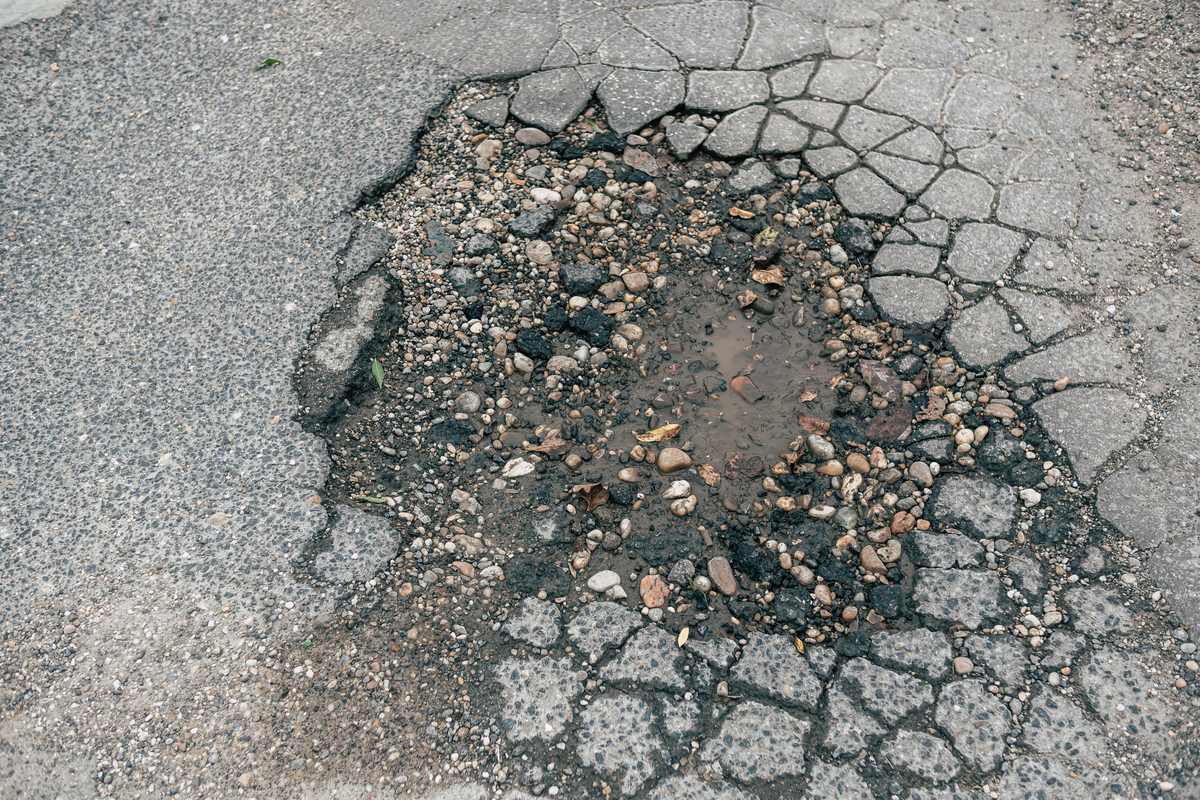
Hurt on a public road, in a public building or by a government vehicle? The notice clock may be only weeks long
I am Mitchell Bisson, a Grand Rapids personal injury lawyer. I have litigated for over 15 years. This page covers injury claims against Michigan governmental agencies: when the law allows a claim at all, which written notices must be served, how short those periods are, and what happens to a claim when a notice is late. I represent injured people. When the defendant is a city, county, township, school district or the State of Michigan, I begin by identifying the agency, the legal exception that applies and the date by which written notice has to be served. I do not promise outcomes.
The short answer. Michigan governmental agencies are immune from tort liability unless a statutory exception applies. Where an exception applies, the claim often depends on written notice served within a short period. For a defective highway or a dangerous public building the statute requires notice within 120 days of the injury. For a personal injury claim against the State, the statute requires a signed and verified claim or notice of intent filed with the Court of Claims clerk within six months. Courts enforce these periods as written, and a late notice is not excused because the agency was not harmed by the delay. Nothing here predicts how your case will end.
Most people who are hurt on government property do not think of the owner as a different kind of defendant. They fall on an icy city sidewalk, hit a pothole, are struck by a county truck, or trip in a public building, and they assume the usual three years to file a lawsuit apply. For a claim against a governmental agency, the three years may not be the controlling deadline at all. The notice period comes first and it is counted from the day of the injury, not the day you learn you were seriously hurt. MCL 691.1407; MCL 691.1404.
The rules also change with the kind of agency and the kind of injury. A state trunk line, a county road, a city street and a township road do not all follow the same notice statute, and a sewer backup has its own system. The sections below separate them so you can see which clock may be running.
When Michigan allows a claim against a government agency
The starting rule is immunity. “Except as otherwise provided in this act, a governmental agency is immune from tort liability if the governmental agency is engaged in the exercise or discharge of a governmental function.” MCL 691.1407(1). A claim therefore has to fit a statutory exception. The ones that arise most often in injury cases are these.
- Defective highways. Each governmental agency having jurisdiction over a highway “shall maintain the highway in reasonable repair so that it is reasonably safe and convenient for public travel.” The duty extends only to “the improved portion of the highway designed for vehicular travel” and does not include sidewalks, trailways, crosswalks or other installations outside that portion, except as section 2a provides. MCL 691.1402(1).
- Municipal sidewalks. A municipal corporation must maintain an adjacent sidewalk in reasonable repair, but is not liable unless the plaintiff proves that at least 30 days before the injury the municipal corporation knew, or in the exercise of reasonable diligence should have known, of the defect. MCL 691.1402a.
- Government-owned motor vehicles. Governmental agencies are liable for bodily injury and property damage “resulting from the negligent operation by any officer, agent, or employee of the governmental agency, of a motor vehicle of which the governmental agency is owner.” MCL 691.1405.
- Public buildings. An agency must repair and maintain public buildings under its control when open for public use, and it is liable if it had actual or constructive knowledge of the defect and failed to remedy it or protect the public within a reasonable time. Knowledge is “conclusively presumed” when the defect was readily apparent to an ordinary observant person for 90 days or longer before the injury. MCL 691.1406.
- Sewage disposal system events. A sewer overflow or backup claim is handled under a separate set of sections that make the statutory procedure the sole remedy. MCL 691.1417.
The statute adds that claims under the act “are subject to all of the defenses available to claims sounding in tort brought against private persons.” MCL 691.1412. A government defendant can therefore raise comparative fault, causation and the other ordinary defenses as well as immunity and notice.
Notice and filing deadlines at a glance
| Claim | Deadline and trigger | Source |
|---|---|---|
| Defective highway | Written notice to the governmental agency within 120 days from the time the injury occurred; 180 days if the injured person is under 18 at the time of injury, or 180 days after the termination of a disability if physically or mentally incapable of giving notice | MCL 691.1404(1), (3) |
| Dangerous or defective public building | Written notice to the responsible agency within 120 days from the time the injury occurred | MCL 691.1406 |
| Personal injury claim against the State | Written claim or notice of intention filed with the Court of Claims clerk within 6 months after the event that gives rise to the claim; other claims against the State within 1 year after the claim accrues | MCL 600.6431(1), (4) |
| County road defect | The county road statute requires written notice within 60 days on the clerk and the board chairperson; the Michigan Supreme Court has applied the 120 day notice to highway exception claims against county road commissions, so I treat 60 days as a precaution | MCL 224.21(3) |
| Sewage disposal system event | Written notice within 45 days after the damage or physical injury was discovered or should have been discovered; the 45 day notice does not apply to claims for noneconomic damages | MCL 691.1419(1), (7) |
| Suit on a highway claim | Limitations period of 2 years for claims arising under section 2 of the act | MCL 691.1411(2) |
| Claims against the State, other than highway claims | Filed with the Court of Claims clerk within 3 years after the claim first accrues | MCL 600.6452(1); MCL 691.1411(3) |
| Other governmental agency claims | Subject to the general law respecting limitations of actions, which is 3 years for most injury claims | MCL 691.1411(1); MCL 600.5805(2) |
What the notice has to say and how it must be served
Highways and public buildings
For a highway claim the statute makes notice “a condition to any recovery.” It must be served by “the injured person, within 120 days from the time the injury occurred,” and it “shall specify the exact location and nature of the defect, the injury sustained and the names of witnesses known at the time by the claimant.” MCL 691.1404(1). A public building notice has the same content and the same 120 days. MCL 691.1406.
Service has its own rules. The notice may be served “upon any individual, either personally, or by certified mail, return receipt requested, who may lawfully be served with civil process directed against the governmental agency,” whatever the local charter says. The agency may require the claimant to appear and testify under oath about the claim, the amount and the extent of the injury. MCL 691.1404(2).
Claims against the State of Michigan
The Court of Claims statute requires a “claim may not be maintained against this state unless the claimant, within 1 year after the claim has accrued, files in the office of the clerk of the court of claims either a written claim or a written notice of intention to file a claim.” For property damage or personal injuries the period is shorter: the claimant “shall file the claim or notice under subsection (1) with the clerk of the court of claims within 6 months after the event that gives rise to the claim.” MCL 600.6431(1), (4).
The claim or notice has four required contents: a statement of the time and place the claim arose; a detailed statement of the nature of the claim and the items of damage; a designation of any department, commission, board, institution, arm or agency involved; and a signature and verification by the claimant “before an officer authorized to administer oaths.” Copies must be furnished to the clerk at the time of filing for transmittal to the attorney general and the designated agencies. MCL 600.6431(2), (3). For a highway claim against the State, the highway statute provides that the notice is filed in triplicate with the clerk of the Court of Claims and that “[f]iling of such notice shall constitute compliance” with section 6431. MCL 691.1404(2).
The State notice rule applies in more than one court. In Christie v Wayne State University, 511 Mich 39 (2023), the Michigan Supreme Court held that “the notice requirements of MCL 600.6431(1) apply to all claims against the state, including those filed in the circuit court, except as otherwise exempted in MCL 600.6431 itself.” So filing in circuit court does not avoid the Court of Claims notice. The Court of Claims has exclusive jurisdiction of claims against the State, except as sections 6421 and 6440 provide. MCL 600.6419(1).
The six month period shortens the general rule and does not replace it. In McCahan v Brennan, 492 Mich 730, 739 (2012), the Michigan Supreme Court described the six month provision, then numbered subsection (3) and now subsection (4), as one that “merely reduces the otherwise applicable one-year deadline to six months.” For an injury claimant, six months is the date to calendar.
County roads and the 60 day statute
County roads add a complication. The county road statute says a board of county road commissioners “is not liable for damages to person or property sustained by a person upon a county road because of a defective county road, bridge, or culvert” unless the person serves, within 60 days after the occurrence of the injury, written notice upon the clerk and upon the chairperson of the board. The notice must set out the time and place of the injury, the manner it occurred, the known extent of the injury, the names of any witnesses, and that the person intends to hold the county liable for damages. MCL 224.21(3).
The governmental tort liability act points to that statute for the “liability, procedure, and remedy as to county roads.” MCL 691.1402(1). In Estate of Pearce v Eaton County Road Commission, 507 Mich 183; 968 NW2d 323 (2021), the Michigan Supreme Court held that the Court of Appeals had been wrong to apply the County Road Law’s 60 day notice provision to a highway exception claim against a county road commission, because in Brown v Manistee County Road Commission, 452 Mich 354 (1996), the Court had decided that the act’s notice provisions control, and it had not overruled that holding. The Court did not decide whether Brown was correctly decided and wrote “we save it for another day.” So the 120 days of MCL 691.1404 is the period the Court has applied to a highway exception claim against a county road commission, while the 60 day statute remains on the books and the question is open. Because of that, I serve notice within 60 days when a county road commission may be responsible. That is a precaution, not a statement that the 60 days controls.
Sewer backups
Sections 16 to 19 apply to damage or physical injury from a sewage disposal system event. A claimant “is not entitled to compensation under section 17 unless the claimant notifies the governmental agency of a claim of damage or physical injury, in writing, within 45 days after the date the damage or physical injury was discovered, or in the exercise of reasonable diligence should have been discovered.” The same section states that it “does not apply to claims for noneconomic damages made under section 17.” Noneconomic damages are available only if the claimant suffered death, serious impairment of body function, or permanent serious disfigurement. MCL 691.1419(1), (7); MCL 691.1418(1), (2).
What happens when a notice is late
Michigan courts have refused to soften these deadlines. In Rowland v Washtenaw County Road Commission, 477 Mich 197 (2007), the Michigan Supreme Court wrote that “the plain language of this statute should be enforced as written: notice of the injuries sustained and of the highway defect must be served on the governmental agency within 120 days of the injury.” The notice is adequate if served within 120 days and otherwise complies with the statute “no matter how much prejudice is actually suffered,” and conversely the provision “is not satisfied if notice is served more than 120 days after the accident even if there is no prejudice.” Rowland overruled earlier cases that had required a showing of actual prejudice to the agency.
The same approach governs claims against the State. In McCahan v Brennan, 492 Mich 730 (2012), the Michigan Supreme Court held that courts may not add an actual prejudice requirement to excuse noncompliance with the statutory notice rules for suing the State. Together these cases mean that an agency that received actual word of the injury, investigated it and was not harmed by the delay can still defend on the ground that the written notice was late or defective.
When I am contacted within the first weeks, I can serve the notice correctly. When the period has already run, I look for the limited exceptions in the statutes: the extended period for a minor or an incapacitated person under MCL 691.1404(3), an exception to immunity that carries no notice requirement, a different defendant, or a claim that does not fall under the statute at all. Some claims cannot be saved, and I say so plainly.
Defendants and defenses in a government claim
Who can be sued. The agency is the usual defendant, but individual officers and employees are a separate question. An employee is immune from tort liability for injury caused while in the course of employment if the employee “is acting or reasonably believes he or she is acting within the scope of his or her authority,” the agency is engaged in a governmental function, and the conduct “does not amount to gross negligence that is the proximate cause of the injury or damage.” MCL 691.1407(2). The statute defines gross negligence as “conduct so reckless as to demonstrate a substantial lack of concern for whether an injury results.” MCL 691.1407(8)(a). For intentional torts, the test for a governmental employee’s immunity is set out in Odom v Wayne County, 482 Mich 459 (2008), and the statute itself says the employee immunity subsection “does not alter the law of intentional torts as it existed before July 7, 1986.” MCL 691.1407(3).
Common defenses. Beyond immunity and notice, a government defendant commonly argues that the agency lacked jurisdiction over the road, that the defect was outside the improved portion designed for vehicular travel, that it had no knowledge of a building defect, that the municipality had less than 30 days to learn of a sidewalk defect, that the condition was open and obvious, or that someone else was at fault. MCL 691.1402; MCL 691.1406.
Records. Public bodies keep records on road repair, inspection and complaints. Under the Freedom of Information Act, a person who provides a public body’s FOIA coordinator with a written request that describes a public record sufficiently “has a right to inspect, copy, or receive copies of the requested public record.” MCL 15.233(1). I use that statute to request complaint logs, incident reports and maintenance records before the lawsuit is filed.
Damages and consequences
If a government claim goes forward, the damages are the same kinds available in other injury cases: medical expenses, lost earnings, pain and suffering and, in a wrongful death case, the losses the wrongful death statute allows. There are some differences particular to government defendants. A judgment against the State based on a highway claim arising from acts or omissions of the state transportation department is “payable only from restricted funds appropriated to the state transportation department or funds provided by its insurer.” MCL 691.1402(1). A governmental agency other than a governmental hospital or medical care facility is not required to pay an uncollectible share of a judgment beyond its own percentage of fault. MCL 600.6304(7). In a sewage disposal system claim, economic damages are generally the only compensation unless the claimant has suffered death, serious impairment of body function or permanent serious disfigurement. MCL 691.1418.
The larger consequence is what happens when the notice is not served. Without it, the claim can be dismissed before any court looks at how the injury happened or what it cost.
Wrongful death, children and injured people who cannot give notice
A death or a serious injury can make notice harder to give. For highway claims, the statute extends the period to 180 days if the injured person is under 18 at the time of the injury, and the notice “may be filed by a parent, attorney, next friend or legally appointed guardian.” If the injured person is physically or mentally incapable of giving notice, the 180 days run from the termination of the disability, and where the person’s capability is disputed, “that issue shall be determined by the trier of the facts.” MCL 691.1404(3).
For a wrongful death claim against the State, the Court of Appeals has addressed how the saving provision for personal representatives interacts with the six month notice. In St Juliana v State Police, No. 370427 (Mich App July 17, 2025), a published decision, it was undisputed that the claim rested on a personal injury under MCL 600.6431(4) and that the notice came more than six months after the event. The court held that MCL 600.5852 “not only extends the filing timeframe but also tolls the statutory notice period albeit any tolling is contingent upon meeting the specific conditions specified within the provision,” reversed the summary disposition and remanded. The Michigan Supreme Court denied leave to appeal on September 16, 2026, which is not a ruling on the merits. In a separate decision, the Michigan Supreme Court held in a malpractice case that the notice-of-intent tolling statute applies to the wrongful death saving period. Ernest v Brown, No. 168462 (Mich July 29, 2026). Because the law in this area is moving, I do not wait on an estate to be opened before protecting the notice. I file a protective notice and then deal with the saving provision.
How I handle a government claim
- I ask for the date of the injury first, and I calendar every notice period that could apply from that date: 120 days, 60 days, 45 days and six months.
- I identify the agency by looking at who owns, controls and has jurisdiction over the road, building, vehicle or system, because the wrong agency can mean a late notice to the right one.
- I photograph and measure the condition and collect witness names, since the notice must state the exact location, the nature of the defect, the injury and the witnesses known at the time.
- I prepare the written notice from the statute for that type of claim, have it signed and, where the State is involved, verified before an officer authorized to administer oaths.
- I serve the notice by a method that leaves proof, personally or by certified mail, return receipt requested, on a person who may lawfully be served with civil process for that agency.
- I request public records about the location or vehicle, and I send a preservation request for video, inspection logs and repair orders.
- I decide with you where the case belongs, the Court of Claims for the State or the circuit or district court for other agencies, and I calendar the filing deadline as well.
Ways a government claim may end without a trial
Government claims settle, often after the agency or its insurer has had a chance to inspect the location and review the records. Some end in a negotiated settlement before suit, and some narrow or end after the court decides a motion on immunity or on notice. I do not promise outcomes.
What I need from you
- The exact date of the injury, which starts the notice clock.
- The exact location, with photographs, the street names and anything that shows who owns or maintains it.
- A description of the defect or hazard and how it caused your injury.
- Names and contact information for anyone who saw what happened or saw the condition before.
- Any written report, incident number, citation or letter from the city, county, township, school or state office.
- Medical records and bills, and the names of the providers who treated you.
- Anything you have already sent or signed for the government body or its insurer.
Where your Kent County government claim will be heard
I represent clients in Grand Rapids, Kentwood, Grandville, Wyoming and across Kent County. Under MCL 600.8301(1), the district court has exclusive jurisdiction in civil actions when the amount in controversy does not exceed $25,000. Kent County district courts include the 61st District Court in Grand Rapids, the 59th in Walker and Grandville, the 62A in Wyoming, the 62B in Kentwood and the 63rd for Rockford, Lowell, Cedar Springs, East Grand Rapids and the surrounding townships. Larger claims are filed in the Kent County Circuit Court, the 17th Judicial Circuit. Claims against the State of Michigan are heard in the Court of Claims.
Why people hire me for a Michigan government claim
You work directly with me, the lawyer handling your case. I give you the strengths and weaknesses of your position straight, including whether a notice deadline is still open. I represent injured people, so the first thing I do is protect the deadline.
Fees depend on the type of case, its complexity and whether it is likely to go to trial. I explain my fee arrangement at the consultation, before you decide whether to hire me.
Questions I hear from people hurt on public property
Can I sue a city, county or the state for an injury in Michigan?
Only within the exceptions to governmental immunity. MCL 691.1407(1) makes a governmental agency immune from tort liability when it is exercising or discharging a governmental function, except as the governmental tort liability act provides. Exceptions include defective highways, negligent operation of government-owned motor vehicles, dangerous or defective public buildings, and medical care.
How fast must I give notice if a road defect caused my injury in Michigan?
Within 120 days of the injury. MCL 691.1404(1) makes written notice a condition to any recovery for injuries from a defective highway. The notice must go to the governmental agency and specify the exact location and nature of the defect, the injury sustained, and the names of witnesses known at the time. If the injured person is under 18, the period is 180 days.
What is the deadline to file a claim against the State of Michigan for a personal injury?
Six months. Under MCL 600.6431(4), a claim against the state for personal injuries or property damage requires a signed, verified written claim or notice of intention filed with the Court of Claims clerk within 6 months after the event; the 1-year period in subsection (1) is the general rule for other claims. The Michigan Supreme Court has refused to add an actual-prejudice exception to such notice rules.
Can I sue a government employee, like a police officer or driver, for causing my injury?
Only in limited situations. Under MCL 691.1407(2), an employee is immune from tort liability if the employee is acting or reasonably believes he or she is acting within the scope of authority, the agency is engaged in a governmental function, and the conduct does not amount to gross negligence that is the proximate cause of the injury. Gross negligence means conduct so reckless as to demonstrate a substantial lack of concern for whether an injury results.
I was hurt in a government building. What do I have to prove and how fast must I act?
Under MCL 691.1406, an agency is liable for injury from a dangerous or defective condition of a public building open for public use if it had actual or constructive knowledge of the defect and failed to remedy it or protect the public within a reasonable time. Notice of the injury and the defect must be served within 120 days.
What should I do first after a fall on someone else’s property in Michigan?
Get medical care and tell your providers exactly how you were hurt. Photograph the spot before it changes, report the fall to the manager or landlord in writing, and get the names of any witnesses. Think carefully before you give a recorded statement to the property’s insurer. If the fall happened on a public street or sidewalk or in a government building, count 120 days forward from the fall right away, because a notice deadline may apply.
Related Michigan pages
- Grand Rapids personal injury lawyer
- Premises liability
- Injury deadlines and statutes of limitation
- Comparative fault
- Negligence
- Michigan legal FAQs
- Michigan injury deadlines and statutes of limitation
- suing a city or county
- civil rights notice deadlines
I represent injured people in Michigan claims against cities, counties, townships and the State. Contact me 24/7 by phone or email. Your Rights, My Fight! Call for a free initial consultation.
Big-Firm Power. Street-Level Grit.
Law Offices of Mitchell S. Bisson, 2828 Kraft Ave SE, Suite 295, Grand Rapids, MI 49512, serving Kent County and West Michigan.
This page provides general information about Michigan law and is not legal advice. Reading it does not create an attorney-client relationship. Laws change and every case turns on its own facts. Consult a licensed attorney about your specific situation.