
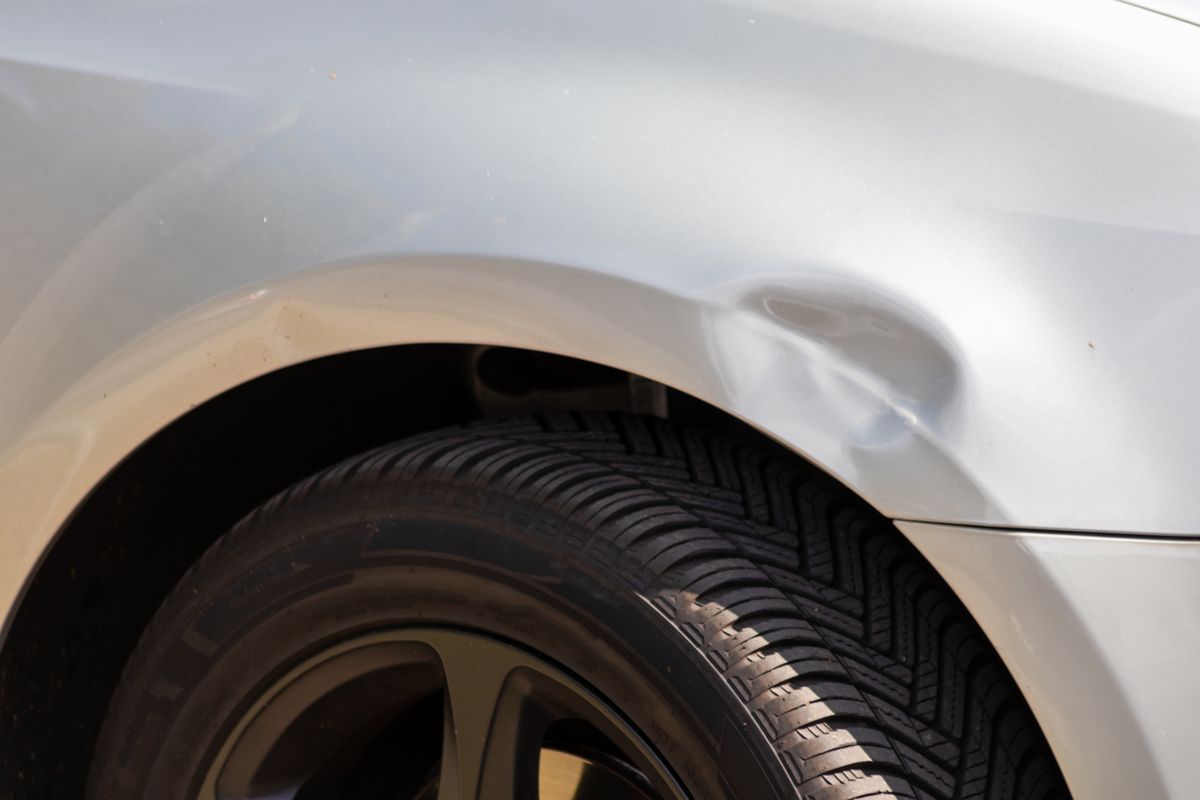
Hit by a driver with no insurance, or not enough? Your own policy may pay, if the claim is protected
I am Mitchell Bisson, a Grand Rapids personal injury lawyer. I have litigated for over 15 years. This page explains uninsured motorist (UM) and underinsured motorist (UIM) claims under Michigan law: what the coverage is, what has to be proved, how insurers defend these claims and what to do before you sign anything with the at-fault driver or that driver’s insurer. I prepare every claim as if it will be tried, and I explain the policy and the law in plain terms. I do not promise outcomes.
The short answer. UM and UIM coverage is optional, so it exists only if you or someone in your household bought it, and the policy wording decides who is covered, what counts as an uninsured or underinsured vehicle and what you must do to keep the claim. Rory v. Continental Ins. Co., 473 Mich. 457, 465-466 (2005). You still have to prove what you would have to prove against the at-fault driver: fault, an injury that meets the Michigan threshold for noneconomic loss, and damages. Policies reported in Michigan cases required notice, cooperation, written consent before settling with the other driver and, for UIM, payment of the other driver’s limits first. Nothing here predicts how your claim will end.
When the person who caused your crash has no insurance, cannot be found or has a policy far smaller than your losses, your own policy may be the only realistic source of payment for what the at-fault driver would otherwise owe you. That makes the policy itself the first thing I read in these cases.
This is a claim against your own insurer, which is a different posture from an ordinary crash case. The insurer is no longer neutral. It wrote the policy, it first evaluates the claim, and it can raise the defenses the at-fault driver could raise as well as contract defenses of its own. The claim has to be built with that in mind from the first day.
The coverage is a contract, so the policy controls
The Michigan Supreme Court has said that uninsured motorist coverage is optional, that no-fault law does not require it and that its rights and limitations are purely contractual. Rory v. Continental Ins. Co., 473 Mich. 457, 465-466 (2005). The Court of Appeals has applied the same rule to underinsured motorist coverage: it is not required by Michigan law, and the terms of coverage are controlled by the language of the contract, not by statute. Dawson v. Farm Bureau Mut. Ins. Co. of Mich., 293 Mich. App. 563, 568 (2011). Unambiguous policy provisions are applied as written unless they violate law or a traditional defense to enforcing a contract applies. Rory v. Continental Ins. Co., 473 Mich. 457, 461 (2005). A term that can reasonably be read two ways is read against the insurer that drafted it, while a term that fairly admits of only one reading is enforced as written. Bianchi v. Auto Club of Mich., 437 Mich. 65, 70 (1991).
Personal protection insurance benefits are a different thing. Those benefits are required by the no-fault act and the statute governs them, so a dispute over your PIP benefits and a dispute over your UM or UIM benefits can follow different rules. Dawson v. Farm Bureau Mut. Ins. Co. of Mich., 293 Mich. App. 563, 568 (2011). I treat them as separate claims with separate deadlines.
Because the contract controls, I ask for a complete certified copy of the policy, with every endorsement, early in every UM or UIM case. The declarations page tells me which coverages and limits you bought. The endorsements hold the definitions of who is insured, what counts as an uninsured or underinsured vehicle, what notice you owed, what the insurer must consent to, and sometimes a shortened deadline to sue or a requirement to arbitrate. Almost every question in these cases is answered by that document.
How a UM or UIM claim works, issue by issue
The table lists the issues that come up most often and where each one comes from. The policy wording can change the answer on every row, so treat the table as a map, not a prediction.
| Issue | What decides it | Rule or limit | Authority |
|---|---|---|---|
| Does the coverage exist? | The declarations page and endorsements of each policy that could apply | Neither coverage is required by Michigan law. The terms are contractual | Rory v. Continental Ins. Co., 473 Mich. 457, 465-466 (2005); Dawson v. Farm Bureau Mut. Ins. Co. of Mich., 293 Mich. App. 563, 568 (2011) |
| Deadline to give notice or sue | The policy wording | A policy that is silent on timing can leave the default six year period for contract claims. An unambiguous shortened period in an insurance policy has been enforced as written | MCL 600.5807(9); Rory v. Continental Ins. Co., 473 Mich. 457, 461 (2005); Rayford v. American House Roseville I, LLC, No. 163989 (Mich. July 31, 2025) |
| Injury threshold for noneconomic loss | Medical records, treatment history and how the injury changed daily life | A person remains subject to tort liability for noneconomic loss only for death, serious impairment of body function or permanent serious disfigurement. The Supreme Court applied that threshold to a UM claim | MCL 500.3135(1), (5); Auto Club Ins. Ass’n v. Hill, 431 Mich. 449, 451, 466 (1988) |
| Fault of the injured person | The crash facts | Damages are assessed on comparative fault, and are not assessed in favor of a party more than 50 percent at fault | MCL 500.3135(2)(b) |
| Hit-and-run vehicle | How the policy words its physical contact requirement | Physical contact requirements are enforceable. What counts as contact depends on the wording | Berry v. State Farm Mut. Auto. Ins. Co., 219 Mich. App. 340, 346-347 (1996); McJimpson v. Auto Club Group Ins. Co., 315 Mich. App. 353, 359-362 (2016) |
| Consent to settle and exhaustion | The policy conditions on settling with the at-fault driver and collecting that driver’s limits | An insurer was not bound by a judgment entered without its written consent, and could not be sued until other payments or judgments were exhausted | Dawson v. Farm Bureau Mut. Ins. Co. of Mich., 293 Mich. App. 563, 565-570 (2011) |
| Policy limit and credit for payments | The UIM limit and the credit language | A court may not enter a judgment above the contract limit. One policy credited the other driver’s payment against the UIM limit | Andreson v. Progressive Marathon Ins. Co., 322 Mich. App. 76, 80-81, 85 (2017) |
| Injured person drove an uninsured vehicle | Whether you were operating your own vehicle and whether the required security was in effect | Damages for noneconomic loss are not assessed in favor of that party, and the owner or registrant of an uninsured vehicle involved in the accident is not entitled to PIP benefits | MCL 500.3135(2)(c); MCL 500.3113(b) |
Uninsured versus underinsured, and how I find out what you have
Uninsured motorist coverage is for injuries caused by a driver who has no liability insurance. Many policies also treat an unidentified hit-and-run vehicle as uninsured, but that is a matter of the policy definitions. Underinsured motorist coverage is for the case where the at-fault driver has insurance that is not enough to cover your losses. In one reported case the at-fault driver’s liability limit was $20,000 and the passenger’s damages were stipulated at $100,000, so he looked to the underinsured provision of his own policy. Dawson v. Farm Bureau Mut. Ins. Co. of Mich., 293 Mich. App. 563, 565-566 (2011). In another, the at-fault driver’s insurer paid its $100,000 limit and the injured people looked to their own underinsured limit of $250,000 each, reduced by the $50,000 each had received. Andreson v. Progressive Marathon Ins. Co., 322 Mich. App. 76, 80-81 (2017).
I also look at every policy that might apply, not just the one on the car you were in. A household member’s policy, the policy on a vehicle you own but were not driving and a motorcycle policy can each have different UM and UIM terms and different definitions of an insured.
What I have to prove
A UM or UIM claim is built on the claim you would have against the at-fault driver. The policy in Auto Club v. Hill promised damages the insured was legally entitled to recover from the owner or operator of an uninsured motor vehicle, and the Supreme Court held that the threshold for noneconomic loss applied to that claim. Auto Club Ins. Ass’n v. Hill, 431 Mich. 449, 451, 466 (1988). That is the model for the proof in almost every case:
- Coverage and insured status. I show that a policy with UM or UIM coverage was in force, that you qualify as an insured under its definitions and that the vehicle meets the policy’s definition of uninsured or underinsured.
- Fault of the other driver. I prove that the other driver was negligent and that the negligence caused your injury. UM coverage lets you collect from your own insurer to the extent a claim would be permitted against the uninsured driver, so the defenses that would be open to that driver are in play. Rory v. Continental Ins. Co., 473 Mich. 457, 465-466 (2005).
- The injury threshold. For noneconomic loss, the injury must be a serious impairment of body function, a permanent serious disfigurement or death. A serious impairment is one that is objectively manifested, affects an important body function and affects your general ability to lead your normal life. MCL 500.3135(1), (5). The statute says there is no temporal requirement for how long an impairment must last, and the inquiry compares your life before and after the crash.
- Comparative fault. If the insurer says you share the blame, damages are reduced by your percentage of fault, and under the statute they are not assessed in your favor if you are more than 50 percent at fault. MCL 500.3135(2)(b).
- Damages. I document medical expenses, lost earnings and earning capacity, and the noneconomic harm: pain, loss of enjoyment of life and any disfigurement. The policy limit caps what the insurer can be ordered to pay. Andreson v. Progressive Marathon Ins. Co., 322 Mich. App. 76, 85-87 (2017).
- Compliance with the policy conditions. Notice, cooperation, proof of loss, consent before settling with the at-fault driver, exhaustion of the other driver’s limits and any suit-limitation or arbitration clause all have to be met or excused.
For a serious injury the threshold question is often decided on the medical evidence. Under the statute, whether the injured person has suffered a serious impairment or permanent serious disfigurement is a question of law for the court when there is no factual dispute about the injuries, or when the dispute is not material to the threshold question. MCL 500.3135(2)(a). For a closed-head injury, a question of fact for the jury is created if a licensed allopathic or osteopathic physician who regularly diagnoses or treats closed-head injuries testifies under oath that there may be a serious neurological injury. I gather the treating records and the before-and-after evidence early.
How insurers defend these claims
Insurers have a short list of defenses in this area. Knowing them early shapes what I ask you for and what I tell you not to do.
- No coverage or an exclusion. The insurer says you are not an insured, that the vehicle does not meet the policy definition or that an exclusion applies. In Bianchi, an uninsured car struck a man riding his wife’s motorcycle, which had no UM coverage. The Supreme Court held that the exclusion in her automobile policy for vehicles owned by the insured or a relative, other than the vehicle named in the policy, applied because the policy’s definition of a motor vehicle included the motorcycle. Bianchi v. Auto Club of Mich., 437 Mich. 65, 67-73 (1991). The Court stressed that its decision rested on the policy language before it.
- A late claim or late suit. A policy may shorten the time to give notice or to sue. In Rory the Court enforced a one year contractual limitations period against a UM claim. Rory v. Continental Ins. Co., 473 Mich. 457 (2005). The Court has since held that language in Rory reaching beyond insurance contracts was not binding, and it described Rory as a break from earlier precedent, so the law here may continue to develop. Rayford v. American House Roseville I, LLC, No. 163989 (Mich. July 31, 2025). I treat the policy deadline as real until a court says otherwise.
- No physical contact. In a hit-and-run claim the insurer says the unidentified vehicle did not touch you or your car.
- Settlement without consent. The insurer says it never approved your settlement with the at-fault driver, or that you did not exhaust that driver’s limits. Dawson v. Farm Bureau Mut. Ins. Co. of Mich., 293 Mich. App. 563, 565-570 (2011).
- The threshold and fault. The insurer disputes that your injury is serious enough or says you share the fault. MCL 500.3135; Auto Club Ins. Ass’n v. Hill, 431 Mich. 449, 451, 466 (1988).
- Offsets and the cap. The insurer credits what the other driver’s insurer paid and argues that the claim cannot exceed the policy limit. Andreson v. Progressive Marathon Ins. Co., 322 Mich. App. 76, 80-81, 85 (2017).
Hit-and-run and phantom vehicles
When a driver flees, UM coverage often depends on the policy’s definition of an uninsured motor vehicle. In the policy in Berry, a hit-and-run vehicle whose owner or driver remains unknown counted as uninsured if it struck the insured or the vehicle the insured was occupying. Berry v. State Farm Mut. Auto. Ins. Co., 219 Mich. App. 340, 342 (1996). The Court of Appeals held that a physical contact requirement is enforceable in Michigan and described its purpose as reducing the possibility of fraudulent phantom vehicle claims. Berry v. State Farm Mut. Auto. Ins. Co., 219 Mich. App. 340, 346-347 (1996).
The result turns on the wording. The Court of Appeals has described three kinds of policy language. Some policies are broad, such as one requiring that the unidentified vehicle hit, or cause an object to hit, an insured or a vehicle the insured is occupying. Some require physical contact without the word direct, and under those a propelled object can count as indirect contact if there is a substantial physical nexus between the object and the unidentified vehicle. Others require direct physical contact, which limits coverage to cases where the unidentified vehicle itself strikes an insured person or vehicle. McJimpson v. Auto Club Group Ins. Co., 315 Mich. App. 353, 359-362 (2016). In McJimpson a piece of metal flew off an unidentified semitruck and struck the plaintiff’s car, and because the policy required direct physical contact the court held that the requirement was not met. McJimpson v. Auto Club Group Ins. Co., 315 Mich. App. 353, 354-355, 361-362 (2016).
In Berry the court found a substantial nexus where a witness had seen a truck hauling scrap metal stopped about a half mile away roughly fifteen minutes before the insured’s car struck a piece of metal in the road. The court also pointed to an earlier decision holding that swerving to avoid a hit-and-run vehicle does not satisfy the physical contact requirement. Berry v. State Farm Mut. Auto. Ins. Co., 219 Mich. App. 340, 342-344, 347, 350-351 (1996).
This area has been contested. In 2021 the Michigan Supreme Court denied leave to appeal in a case applying the substantial nexus test, and one justice, dissenting from the denial, would have granted leave to consider whether to overrule the cases that use it. Tankanow v. Citizens Ins. Co. of Am., 955 N.W.2d 485 (Mich. 2021) (Zahra, J., dissenting from denial of leave). Because of that, I read the exact wording and I collect proof right away: the police report, the names of witnesses, any video and photographs of the scene and the debris. If you were in a crash with a vehicle that left, call the police from the scene and report it to your insurer promptly.
Settling with the at-fault driver without losing your own coverage
This is where a UIM claim is most easily damaged. The at-fault driver’s insurer offers its policy limit, the injured person is tired of waiting and the offer looks like a way to close part of the case. A release signed before the UIM insurer has been asked can end the claim against the driver, and it cannot be undone afterward.
In Dawson the at-fault driver’s insurer wanted to settle for its $20,000 limit, but the injured passenger’s policy required his underinsured insurer to approve any settlement, and the insurer declined. The court enforced the policy language that the insurer would not be bound by any judgment or settlement made without its written consent, so the passenger could not use his judgment against the driver to collect from his own insurer. The court explained that such terms keep the insurer out of litigation until it is determined that the driver is actually underinsured and preserve its right to contest liability and damages. Dawson v. Farm Bureau Mut. Ins. Co. of Mich., 293 Mich. App. 563, 565-570 (2011). In Andreson the policy also required permission before settling. The insurer first declined, the injured people sued, the insurer later granted permission and they settled for the driver’s limit. Andreson v. Progressive Marathon Ins. Co., 322 Mich. App. 76, 80-81 (2017).
Neither case decided whether a person who settles without consent loses the claim entirely. That depends on the clause, any exhaustion requirement, what the insurer knew and when, and what rights the settlement gave up. I do not leave it to chance. The sequence I follow is:
- Read the UM and UIM sections and the conditions of the complete policy before any settlement talks.
- Confirm the at-fault driver’s limits in writing, and ask for a statement of the coverage that responds.
- Send the UIM insurer a written request for consent that states the proposed amount and the driver’s limits, and keep the response.
- Sign a release only after the consent question is answered in writing, and read the release for language that goes beyond the claim against the driver.
What the claim can recover, and what it cannot
A UM or UIM claim does not create new damages. It pays, up to the policy limit, what the at-fault driver would have owed you if that driver had been insured enough to pay. The Supreme Court has described UM coverage as standing in for the missing liability insurance of the at-fault driver, and as protection against being left with a worthless claim against an uninsured motorist. Auto Club Ins. Ass’n v. Hill, 431 Mich. 449, 459-461 (1988) (discussing Bradley v. Mid-Century Ins. Co., 409 Mich. 1 (1980)). The limit is a cap: in Andreson the trial court could not enter a judgment above the maximum liability set in the contract, and the case went back for judgment at the policy-limit figure after the credit. Andreson v. Progressive Marathon Ins. Co., 322 Mich. App. 76, 85-87 (2017).
The categories of loss are the ones in any injury case. Economic loss includes medical expenses and lost earnings or earning capacity. Noneconomic loss includes pain, mental anguish and the effect of the injury on your life. In a case against an insured at-fault driver, the no-fault act also preserves a claim for allowable expenses, work loss and survivor’s loss that exceed the applicable PIP limit or the daily, monthly and three year limits. MCL 500.3135(3)(c). Whether your UM or UIM policy responds to that excess economic loss depends on its wording, and I read the insuring agreement for that before I describe the claim to you.
If you were a passenger, a rider or a cyclist
Whether you can claim under your own coverage as a passenger, pedestrian, cyclist or rider depends on the policy’s definition of an insured and its exclusions. In Dawson the injured person was a back seat passenger who claimed underinsured benefits under his own policy after the driver’s insurer paid its limit. Dawson v. Farm Bureau Mut. Ins. Co. of Mich., 293 Mich. App. 563, 565-566 (2011). A rider faces a particular problem, which is the other-owned-vehicle exclusion the Supreme Court enforced against a motorcycle rider in Bianchi. Bianchi v. Auto Club of Mich., 437 Mich. 65, 67-73 (1991).
So I look at every policy that might apply: the policy on the vehicle you were in, any household policy and the policy on the motorcycle or bicycle, if any. For a rider or cyclist, I also look at the no-fault rules for who pays PIP, which are separate from UM and UIM coverage.
How I handle a UM or UIM claim
- Free consultation. I listen to what happened, ask about every policy in your household and tell you what I can and cannot assess without the documents.
- Get the policy. I request the certified policy with every endorsement and calendar every notice, consent and suit deadline in it.
- Give notice. I make sure the UM or UIM insurer, the at-fault driver’s insurer and your no-fault insurer have written notice, and I keep proof of what was sent.
- Build the injury case. I collect medical records, wage records, photographs and witness statements, and I document how your body function and daily life changed.
- Cover the at-fault side. I identify the driver, the vehicle, the owner and every policy that responds. For a hit-and-run, I chase the physical and witness evidence.
- Manage consent. Before any settlement with the at-fault driver, I request the UIM insurer’s written consent and get the answer in writing.
- Present, negotiate and litigate. I present the claim with the proof, tell you what each offer means under the policy terms and, if needed, file suit or demand arbitration where the policy calls for it.
How these claims end
A UM or UIM claim can end in a negotiated resolution with the insurer. Some policies send the dispute to arbitration, as the policy in Auto Club v. Hill did, where the dispute was submitted to an arbitration panel. Auto Club Ins. Ass’n v. Hill, 431 Mich. 449, 451-452 (1988). Others end in a lawsuit against your own insurer. I explain each path, what it costs in time and effort, and what the policy says about it, and the decision to accept or reject an offer is yours.
What I need from you
- Every policy that might apply, with the declarations page and all endorsements.
- The police report number, the other driver’s information and photographs of the vehicles and the scene.
- Every letter, email and recorded statement you have given to any insurer.
- Your medical providers, dates of treatment and bills, and your employer and pay records for time missed.
- Any offer from the at-fault driver’s insurer, and any release or consent form anyone asks you to sign. Please call me before you sign it.
- Names of witnesses, and for a hit-and-run, anyone who saw the other vehicle and any nearby video.
Where your claim will be heard in Kent County
I represent clients in Grand Rapids, Kentwood, Grandville, Wyoming and across Kent County. Under MCL 600.8301(1), the district court has exclusive jurisdiction in civil actions when the amount in controversy does not exceed $25,000. Kent County district courts include the 61st District Court in Grand Rapids, the 59th in Walker and Grandville, the 62A in Wyoming, the 62B in Kentwood and the 63rd for Rockford, Lowell, Cedar Springs, East Grand Rapids and the surrounding townships. MCL 600.8128a; MCL 600.8130. Larger claims are filed in the Kent County Circuit Court, the 17th Judicial Circuit. MCL 600.518.
Why people hire me for these claims
- I read the policy first. The contract controls, so I do not guess at coverage.
- I treat the claim as a dispute with your insurer from day one, because the insurer will defend it.
- I protect the claim before it is at risk: notice, consent and deadlines come before negotiation.
- I prepare the injury proof for the threshold and the policy proof for coverage together, so neither is left until the end.
- I tell you plainly what the documents say, including when they say the coverage does not reach your loss.
- I do not promise outcomes. I give you the facts, the law and my honest read of the case, and the decisions are yours.
Questions I hear from people hit by an uninsured or underinsured driver
What is the difference between uninsured motorist and underinsured motorist coverage, and how do I know if I have either on my Michigan policy?
Both are optional coverages bought from your own insurer, and the policy wording, not a statute, sets the terms. Uninsured motorist coverage is for injuries caused by a driver with no insurance, and many policies also treat an unidentified hit-and-run vehicle as uninsured. Underinsured motorist coverage is for when the at-fault driver has insurance that is not enough. The declarations page and the endorsements show whether you have either and in what amounts.
How do uninsured and underinsured motorist claims work in Michigan, and how long do I have?
Uninsured and underinsured motorist coverage is contractual, so your policy decides who is covered, what counts as uninsured or underinsured, and how fast you must give notice or sue. The default limitations period for a contract claim is six years under MCL 600.5807(9), but the Michigan Supreme Court has enforced unambiguous shortened policy periods as written, although it has since criticized the reasoning of that decision.
If the at-fault driver's policy limits are too low to cover my injuries, how does underinsured motorist coverage work in Michigan?
It is a contract claim against your own insurer, so the policy controls. Policies reported in Michigan cases required the injured person to exhaust the at-fault driver's limits first, credited what that insurer paid against the underinsured limit, and capped the claim at the underinsured limit. The claim still has to be proved: fault, the tort threshold and damages. An insurer that was not part of the earlier lawsuit may not be bound by the result if the policy says so.
Do I need my own insurer's permission before I settle with the at-fault driver, or can I lose my UM or UIM coverage?
Check the policy before signing anything. Underinsured motorist policies reported in Michigan cases required the insurer's written consent before the injured person settled with the at-fault driver, and Michigan courts apply unambiguous policy terms as written. The cases did not decide what happens to the claim when a person settles without consent, so that turns on the exact wording and facts. A written request for consent, made before any release is signed, avoids the question.
Can I use my own UM or UIM coverage if I was a passenger, a pedestrian or on a bicycle or motorcycle in Michigan?
Often, but the policy's definition of who is insured and its exclusions decide. A passenger in one reported Michigan case claimed underinsured benefits under his own policy. The Supreme Court described the standard endorsement in 1980 as covering insureds in another vehicle, on foot or on a bicycle, but that rested on a former statute. For motorcycles, exclusions for other owned vehicles have been enforced against riders whose motorcycle had no UM coverage of its own.
A hit-and-run driver never touched my car. Does my uninsured motorist coverage still apply in Michigan?
It depends on the policy's wording. Michigan courts enforce a physical contact requirement for hit-and-run claims. Under a policy that says only physical contact, indirect contact can count, such as an object thrown or dropped by the unidentified vehicle, if a substantial physical nexus is shown. Under a policy that requires direct physical contact, an object that flew off the other vehicle did not qualify. Swerving to avoid a vehicle was held not to satisfy the requirement.
I was driving my own car without insurance and I was hit. Can I still sue?
Not for pain and suffering, and what economic claims remain depends on the facts. Under MCL 500.3135(2)(c), noneconomic damages must not be assessed in favor of a party who was operating his or her own vehicle without the required security in effect. You are also excluded from PIP benefits as the owner or registrant of an uninsured vehicle under MCL 500.3113(b).
Related Michigan pages
- Grand Rapids personal injury lawyer
- Car accident
- Who pays no-fault benefits and assigned claims
- PIP coverage levels and the medical fee schedule
- Pedestrian, cyclist and motorcycle crashes
- Breach of contract
- Michigan legal FAQs
- insurance claim disputes in civil court
I represent people hurt by uninsured and underinsured drivers in Kent County and West Michigan. Contact me 24/7 by phone or email. Your Rights, My Fight! Call for a free initial consultation.
Big-Firm Power. Street-Level Grit.
Law Offices of Mitchell S. Bisson, 2828 Kraft Ave SE, Suite 295, Grand Rapids, MI 49512, serving Kent County and West Michigan.
This page provides general information about Michigan law and is not legal advice. Reading it does not create an attorney-client relationship. Laws change and every case turns on its own facts. Consult a licensed attorney about your specific situation.